


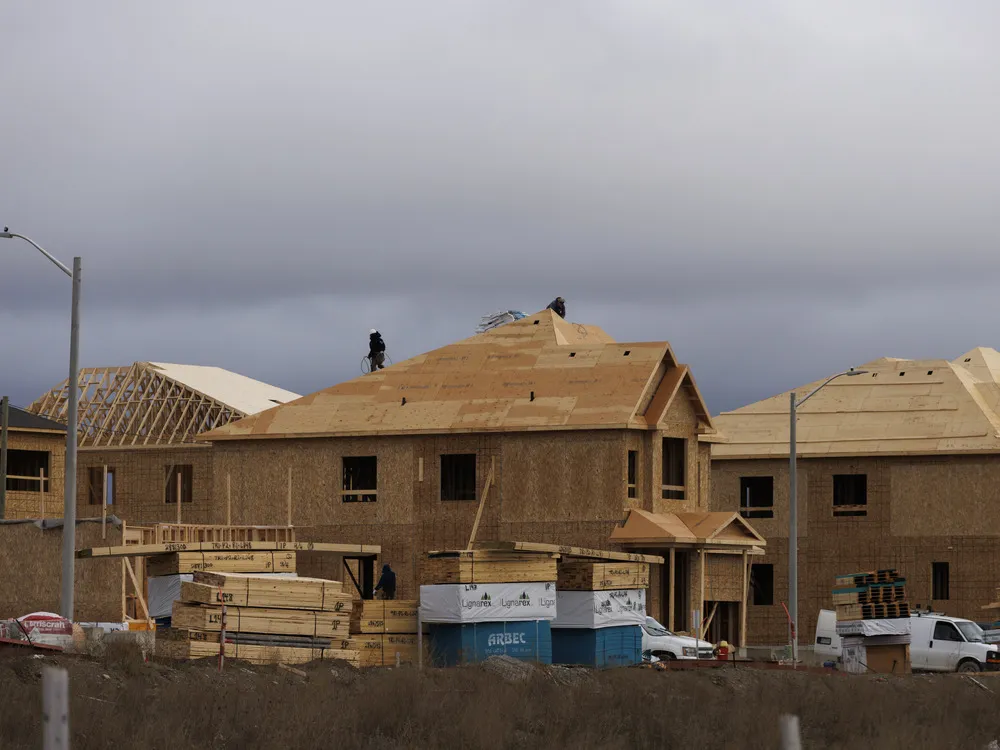
A $200,000 difference in municipal fees separates the cost of building a single-family home in Toronto from that of building a single-family home in Atlantic Canada – a difference that worsens affordability, according to a new Senate report.
According to Out of Reach: Unlocking Canada’s Housing Affordability Crisis, released this week by the Senate Standing Committee on Banking, Commerce and the Economy, the average amount of municipal fees incurred on a single-family home in Toronto is about $200,000. In comparison, fees in Moncton and Charlottetown are less than $10,000.
The committee argues that wide disparities in municipal taxes, combined with long approval timelines and outdated federal tax policies, are driving up real estate prices and restricting supply in many of Canada’s largest markets.
The costs don’t just increase sticker prices. Real estate economist Mike Moffat said they could also determine whether projects are moving forward at all. “These costs are ultimately passed on to home buyers and renters,” he said. “If people can’t afford that price, the house won’t be built.”
The result is a dynamic that both increases prices and reduces housing supply.
At the heart of the problem are development fees – levies levied on municipalities to fund growth-related infrastructure and services. In Ontario, development fees cover a wide range of services, from roads and public transportation to water systems and emergency services.
While municipalities argue that the fees are needed to finance growth-critical infrastructure, economists say developers have limited ability to absorb them without jeopardizing project financing.
From an economic perspective, Moffat said, margins are “only so low that margins on new housing can be achieved before financial institutions refuse to lend money to developers for projects”. Because builders must demonstrate profitability to secure financing, “these costs are ultimately eaten up by homebuyers or renters.”
However, the exact extent of this sharing is difficult to measure, in part due to data gaps. “Canada has terrible data when it comes to development fees,” Moffat said, pointing out that municipalities set fees differently, making comparisons difficult.
The lack of standardized data has led policymakers to rely more on theory than evidence when assessing how fees affect prices and supply.
Delays in approvals are another important reason for high housing costs, the Senate report says. Depending on the municipality, it can take between five and 31 months for building applications to be approved. In parts of the Greater Toronto Area, the entire development process – from the initial consultation to the finished home – can take up to 11 years.
Long schedules increase both risk and cost for builders. Projects become riskier when developers do not know whether permits will be granted and under what conditions. The process itself also has direct financial consequences. Legal work, repeated design changes and interest costs on land financing all add up, Moffat said, pushing developers to pursue only projects with high enough returns to justify the uncertainty.
While approval times are more heavily tracked than development costs, the most significant impact is on costs. Shortening the timelines would reduce these costs, Moffat said, and the savings would “trickle down to tenants and buyers,” although the direct impact on overall supply is harder to isolate.
To address affordability pressures, the Senate recommends expanding the federal GST/HST new home rebate and linking it to inflation. The current discount only applies to homes valued up to $350,000 and has not been updated since it was introduced in 1991, when most new homes qualified. In many urban markets, new construction prices are now well above this threshold.
In the short term, expanding the rebate could have a measurable impact on the price of new homes. “In Ontario, the price of a home would drop by about 10 to 15 per cent, assuming the province follows the change,” Moffat said.
In the longer term, however, the effect is likely to be less clear. Without parallel supply-side reforms, he warned, there is “legitimate concern” that the benefits could be absorbed elsewhere in the system. “Unless you couple it with other supply changes,” he said, “over time, much of that benefit will accrue to landowners rather than buyers.”
When fees, taxes and approval timelines are considered together, no single factor stands out across all markets. “Both are important,” Moffat said, noting that the balance varies by city.
Still, he argued, delays in approval could produce the most significant efficiencies. In contrast to development fees, which redistribute costs, lengthy approval processes cause costs for both developers and municipalities. “Approval deadlines are often a waste,” he said. “They cost everyone.”
• Email: shcampbell@postmedia.com