


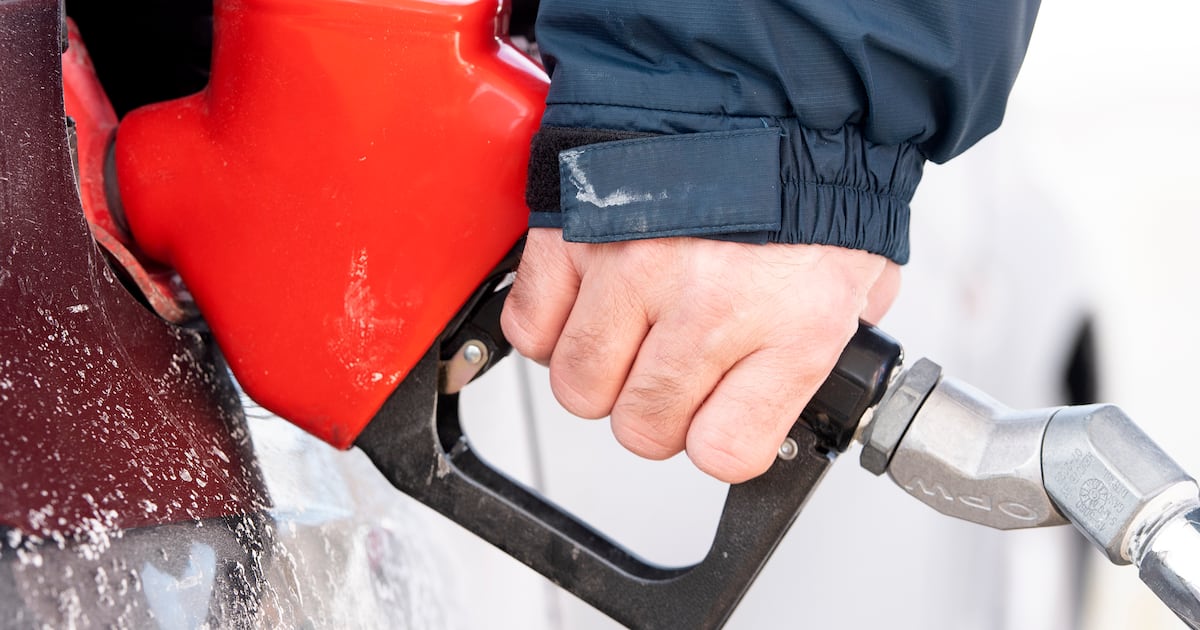
The war in the Middle East is directly impacting gas prices across Canada and around the world. With no clear indication of how long the conflict will last, Canadians expect gas prices to continue rising.
Across the country, pump prices are skyrocketing, from 173 cents/liter in British Columbia to 166.6 cents/liter in Newfoundland as of Monday.
CTV News Channel spoke with two experts Monday to gauge where things might go next.
Ian Lee is a business analyst at the Sprott School of Business at Carleton University in Ottawa. He said that despite advances in alternative energy sources such as solar and wind, oil and gas still dominate energy supplies around the world.
Economic Analyst: Strait of Hormuz Reopening ‘Critical’ for Lower Oil and Gas Prices Economic analyst Ian Lee expects oil and gas prices to fall “very, very quickly” once the strait reopens.
Lee added that, according to the International Energy Agency, more than 50 percent of all energy comes from oil and gas and 20 percent of global oil supplies come through the Strait of Hormuz, which is currently closed because of the war.
Lee said a lot depends on how long the strait is closed.
“If they open it up, those prices are going to go down very, very quickly,” he told CTV News Channel on Monday. “But it’s really a question of when the war with Iran will end.”
Lee said the good news for Canadians is that natural gas prices, unlike oil, depend on the region. Since North America has a significant supply of natural gas, he said these prices would not be affected, adding that the same could not be said for countries like Europe and Asia, where “in addition to gasoline prices, natural gas is also going through the roof.”
“Oil is what greases the wheels of the economy”: Analyst on rising gas prices Heather Exner-Pirot from the Macdonald Laurier Institute on what the closure of the Strait of Hormuz and higher energy prices mean for the overall economy.
Beyond the pump
Heather Exner-Pirot is a senior fellow and director of natural resources, energy and environment at the Macdonald-Laurier Institute. She described oil as the “wheel of the economy,” affecting everything from transportation to production, and in turn, “almost everything is impacted when energy prices rise.”
“When energy prices are high, there is creeping inflation,” she said. “So higher energy prices affect almost everything.”
On Monday, G7 finance ministers met to discuss the possibility of releasing oil reserves. Exner-Pirot said this helped ease fear and panic over the situation as the oil market had slumped somewhat. However, if the Strait of Hormuz remains closed, Exner-Pirot emphasized, we would continue to see rising oil prices.
“It’s based on physical care,” she said. “We are simply bringing less physical supplies into the world. Therefore, prices will rise until the inflow through the Strait of Hormuz is possible.”
She added that there will likely be pressure on the U.S. to cut prices as the car season begins and ahead of the midterm elections.
It will take time for oil prices to recover: expert
Gitane De Silva, former CEO of Canada’s Energy Regulator, told CTV News Channel on Monday that she expects volatility around oil prices to continue as long as the conflict continues and for some time afterward. “It’s pretty easy to turn off the taps, but it takes a while to get production going again on the other side,” she said. “Even if there is peace tomorrow, I think this volatility will continue for a while after that.” She added that potential damage to oil and gas infrastructure, such as the Bahrain refinery bombing, will impact global oil prices beyond the end of the war.