


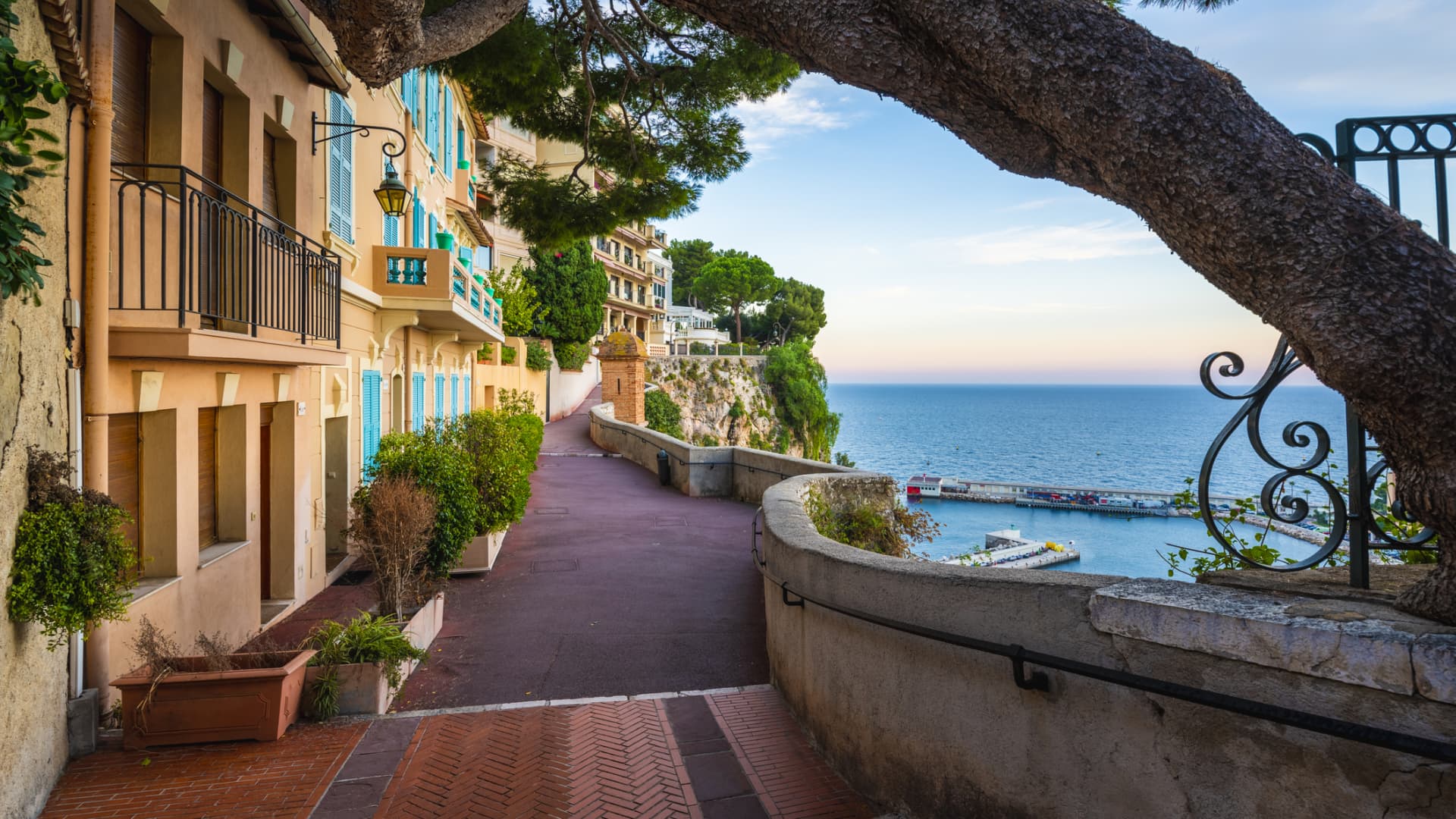
France, Provence-Alpes-Côte d’Azur, French Riviera, Alpes-Maritimes, Principality of Monaco.
Marco Bottigelli | moment | Getty Images
A million dollars isn’t what it used to be – especially when it comes to luxury real estate.
According to the new Knight Frank Wealth Report, $1 million can buy you just 16 square meters (or about 172 square feet) in Monaco, the world’s most expensive luxury market per square meter. This is a decrease from the 17 square meters in 2020.
In Hong Kong, which comes in second, $1 million gets you 22.5 square meters, or about 242 square feet. New York looks positively affordable compared to London, Singapore and Geneva: $1 million gets you 33.9 square meters or 365 square feet.
Luxury real estate is becoming increasingly expensive in most of the world’s major markets as the rich become increasingly wealthy and mobile. Last year, prime property prices rose 3.2% across the 100 markets tracked by Knight Frank, outpacing the 2.9% growth in mainstream property prices worldwide.
According to the report, the Middle East led global luxury growth last year, with prices in Dubai, United Arab Emirates, rising 25% in 2025 and nearly 200% over the past five years. According to the report, Tokyo was the highlight in 2025 with a price increase of 58%. Manila, the Philippines, Seoul, South Korea and Prague also recorded sharp price increases.
For future growth, Knight Frank says Mumbai, India, Brisbane, Australia, Miami and Hong Kong are future hotspots for luxury real estate. According to the report, the super-rich are more mobile than ever, buying homes around the world and flitting from city to city more often.
“Rising taxes and growing regulatory pressure are accelerating global wealth mobility,” the report said. “As a result, established centers such as London are shifting towards a ‘dip-in, dip-out’ model: places to spend time for business, culture and connectivity, rather than permanent residency.”
Liam Bailey, global head of research at Knight Frank, said the luxury markets with the best prospects had low supply combined with strong lifestyle and tax attractiveness. Miami, Milan and Dubai, for example, have attractive tax environments. New York and London attract the wealthy because of their lifestyle offerings and concentration of business. Nevertheless, both cities are becoming less attractive for tax reasons.
“Any market that wants to successfully attract UHNW capital over the next decade must be positioned at an attractive point on the tax curve,” Bailey said. “Capital is already shifting from high-friction environments to jurisdictions where wealth is actively sought.”
Get Inside Wealth straight to your inbox
Choose CNBC as your preferred source on Google and never miss a moment from the most trusted name in business news.