


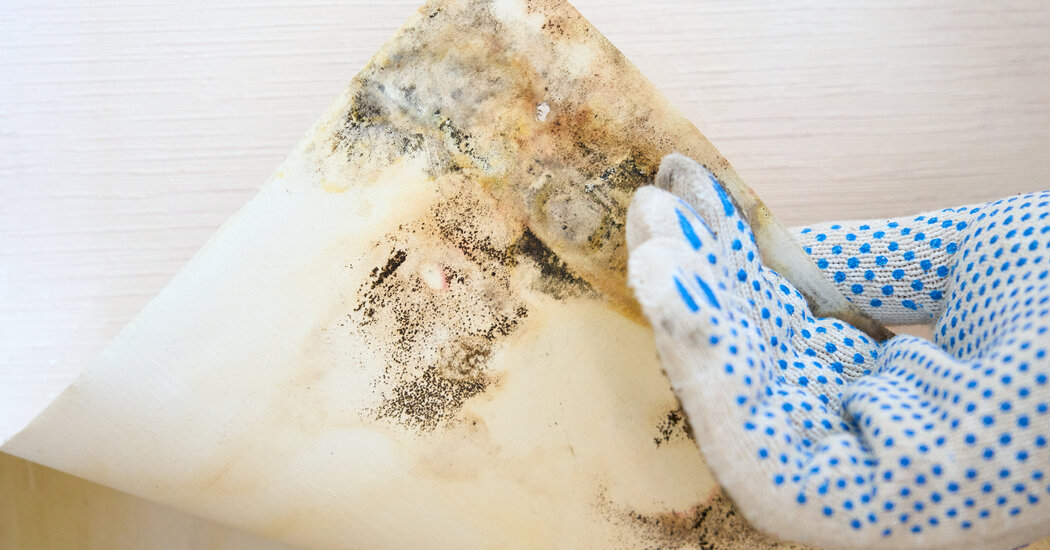
If it seems like everyone you know is talking about mold, that’s because a lot of them are—or at least interested in it. According to Google Trend data, searches for “household mold” and related terms have become increasingly popular over the past five years. Examples include “mold symptoms,” a 170 percent increase, and “professional black mold removal,” a 250 percent increase.
The fascination has also spread to social media: on TikTok alone there are more than half a million videos with the tag #mold. But while mold numbers are certainly increasing, a connection to a higher incidence rate is harder to establish.
“There’s no standardized way to research this topic, so you can’t take two snapshots in a timely manner and really compare them,” said Jonathan Wilson, deputy director of the nonprofit National Center for Healthy Housing.
“I haven’t seen any research that shows it’s increasing,” said Dr. Parham Azimi, a research fellow at the Harvard TH Chan School of Public Health. In his research, Dr. Azimi mainly houses affected by hurricanes or extreme rainfall. Mold thrives in moist environments, and while flooding has increased in recent years across the United States, droughts are also on the rise.
Even though mold is more common in the home, it may not be a cause for concern. The vast majority of people exposed to mold experience no ill effects, Dr. Joshua Nosanchuk, a professor and microbiology researcher at the Albert Einstein College of Medicine and an infectious disease physician at Montefiore Health System. A small number of people, mostly with weakened immune systems or allergies, could experience adverse health effects. “I don’t think it’s the totality of all the ailments that people suffer from,” said Dr. Nosanchuk.
You can purchase a mold testing kit at a store, but the Centers for Disease Control warns that a reliable sample is expensive and there are no set standards for acceptable levels of different types of mold in the home. If you see or smell mold, the Environmental Protection Agency recommends removing it with soap and water or a bleach solution. For areas larger than 10 square feet, the EPA recommends seeking professional help from an accredited company.
Mold cannot grow without moisture. Therefore, make sure you fix any leaks or floods immediately to prevent them from occurring. One simple thing you can do, according to Dr. Azimi to open the windows more often. According to his research, keeping them closed was a key indicator of the likelihood of mold prevalence.
Dr. Nosanchuk acknowledged that mold can be dangerous, but also defended it. “They give us cheese, they give us beer, they give LSD – they do a lot of really cool things.”