


Throughout April, UrbanToronto is offering a special State of Environment editorial series to examine critical sustainability issues in our region.
* * *
Sustainability standards have evolved over the last decade, and the focus of development has shifted beyond operational energy performance to the materials that characterize buildings from the outset. The Toronto Green Standard has expanded expectations for embodied carbon consideration, urging projects to consider the environmental impact of structural systems, finishes and construction methods in addition to long-term efficiency. In response, more material innovations, from solid wood and low-carbon concrete mixes to recycled composites and new bio-based alternatives, are beginning to reshape the way buildings are designed and constructed. Across the Greater Toronto Area and beyond, these changes are positioning material selection as a central part of sustainable building.
One of the most visible changes in low-carbon construction is the increasing use of mass timber, a category of engineered wood that also includes cross-laminated timber (CLT) and glued laminated timber. Formed by layering and bonding dimensionally stable lumber into large structural panels or beams, these systems provide the strength required for mid-rise and increasingly tall buildings while significantly reducing carbon content. Unlike traditional materials, wood stores the carbon absorbed during tree growth, allowing buildings to act as carbon stores in the long term. At the same time, factory prefabrication enables greater precision, shorter construction times and less waste on the construction site.
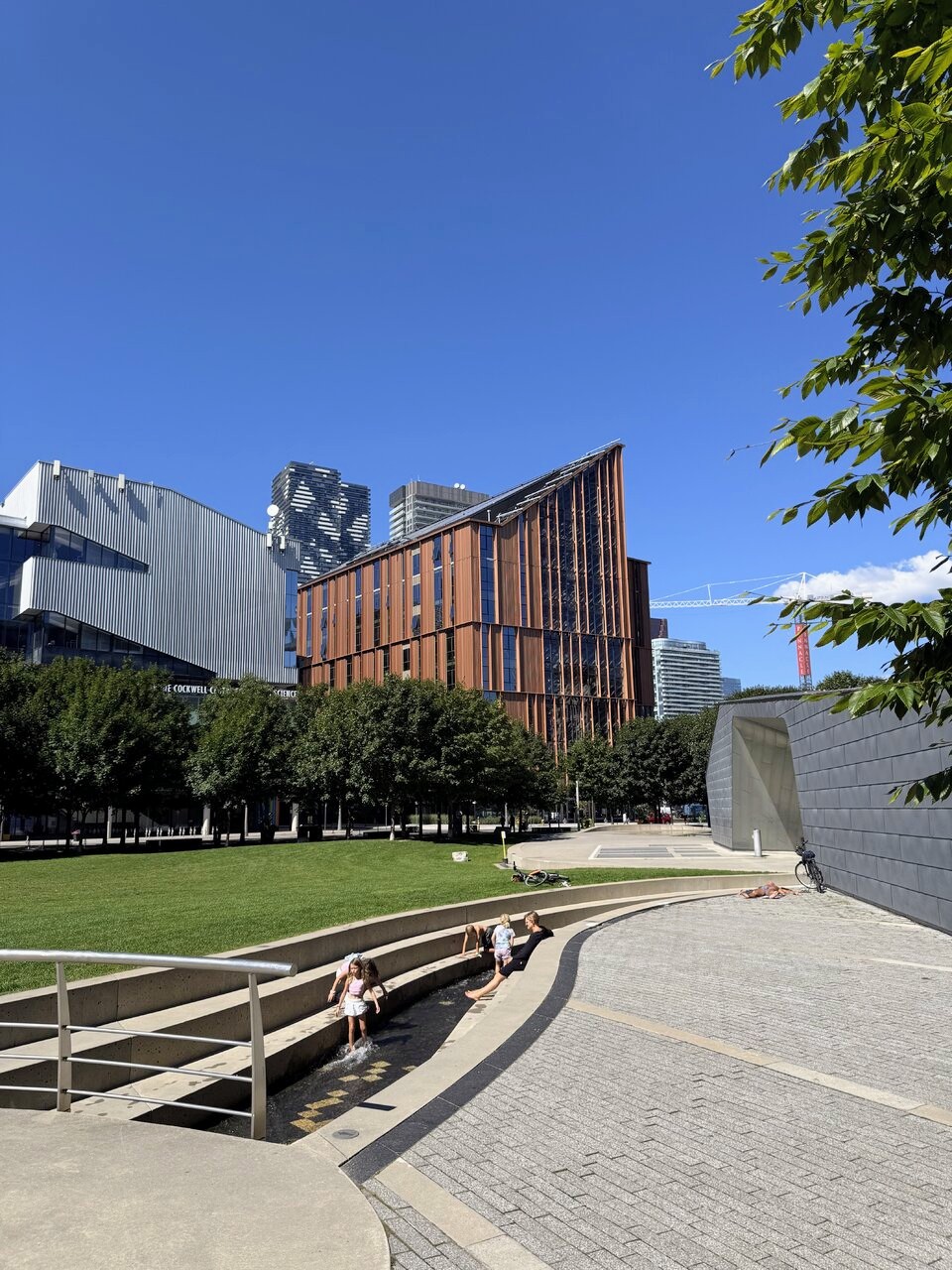
In Toronto, adoption is progressing through a number of high-profile projects, particularly along the waterfront. Developments such as T3 Bayside and Limberlost Place at George Brown College show how wood can be used on a large scale in office and institutional contexts, supported by updates to the Ontario Building Code that have expanded allowable building heights. While concrete and steel continue to dominate in high-rise construction, mass timber is playing an increasingly important role in mid-rise and hybrid systems, where it can be combined with other materials to balance structural performance, fire resistance and cost.
Limberlost Place wooden building at George Brown College, image by Rdaner, UrbanToronto Forum contributor
Concrete remains fundamental to high-rise construction across the GTA, which is why reducing its environmental impact is a key focus of materials innovation. According to research on cement-related emissions, the production of cement (the binding agent in concrete) is responsible for a significant proportion of global emissions, accounting for around 8% of CO₂ emissions. In response, the industry is pushing lower-carbon mixes that reduce cement content through the use of additional materials such as slag and fly ash, as well as recycled aggregates. More experimental approaches, including carbon-absorbing alternatives such as Ferrock, suggest that concrete has the potential to evolve from a major emissions source to a more balanced material.
In addition to changes in primary structural materials, the increasing use of recycled and reclaimed inputs is changing construction practices towards a more circular model. Recycled steel, reused aggregates and reclaimed components are being specified more frequently, reducing reliance on virgin extraction while diverting waste from landfill. In Ontario, suppliers and contractors are expanding access to locally sourced recycled materials, reflecting industry trends toward resource efficiency and lifecycle thinking. New applications of recycled plastic in composite products expand this approach, particularly in non-structural elements such as decking, paneling and building furnishings.
The exposed timber structure of T3 Bayside is visible through the glazed façade, image by UrbanToronto Forum contributor Edwarander
Beyond wood, a number of bio-based materials are also being discussed as more environmentally friendly alternatives for certain construction applications. Products such as hempcrete, cork boards and new mycelium-based composites offer reduced carbon content while sourcing from renewable or regenerative sources. These materials can also contribute to improved thermal performance and indoor air quality, and are consistent with broader sustainability goals set out in sustainable architecture frameworks. While their use in large urban construction, particularly in high-rise format, remains limited, they are becoming increasingly important in low-rise projects, pilot programs and indoor systems where building regulations are less restrictive.
Rapidly renewable materials also find a place in modern building systems, particularly in finishes and interior applications. Materials like bamboo, which can mature in a fraction of the time required for traditional lumber, offer a gentler alternative for flooring, millwork and paneling, reducing pressure on slower-growing forestry resources. While structural use in Canada remains limited due to climate conditions and supply chain constraints, these materials contribute to sustainability goals by reducing carbon levels in non-structural components.
Less visible but equally influential, advances in insulation and building envelope systems play a key role in reducing both operational and physical emissions. Alternatives to traditional fiberglass, including cellulose from recycled paper, wood fiber insulation and mineral-based products, are increasingly being specified due to their lower environmental impact and strong thermal performance. These materials support denser, more efficient building envelopes that reduce heating and cooling needs and are consistent with performance goals set forth in the Toronto Green Standard. In parallel, improvements in facade systems, from high-performance glazing to prefabricated wall assemblies, are helping to improve airtightness and durability.
CIBC Square’s high-performance curtain wall system, image by UrbanToronto Forum contributor slickpete83
Material innovations are also being driven by the way buildings are assembled, with prefabrication and modular construction improving efficiency throughout the construction process. Panel systems, often made from solid wood, precast concrete or façade components, are manufactured off-site under controlled conditions, allowing for tighter tolerances and less material waste. This approach can reduce construction time while limiting disruption on site, an important consideration in dense urban environments such as the Greater Toronto Area. As noted in Waterfront Toronto’s mass timber initiatives, prefabrication is closely linked to the performance of newer material systems, allowing for more precise deployment and supporting sustainability goals related to resource efficiency and construction emissions.
In many cases, the most effective way to reduce material-related emissions is to maintain what already exists. Adaptive reuse (whether through historic preservation or office-to-residential conversion) preserves the carbon sequestered in existing structures, avoiding the environmental costs of demolition and production of new materials. This approach is gaining traction across the Greater Toronto Area, where aging building stock and changing market conditions are creating opportunities for reinvestment rather than replacement. Extending the lifespan of existing buildings can significantly reduce life cycle impacts while maintaining urban continuity.
United BLDG’s historic façade with tower towering above retained, image by UrbanToronto Forum contributor Rascacielo
* * *
UrbanToronto’s research and data service, UTPro, provides comprehensive data on construction projects in the Greater Golden Horseshoe – from proposal to completion. Other services include instant reports, downloadable snapshots based on location, and a daily subscription newsletter, New Development Insider, that tracks projects from the first application.
* * *
Thank you to the businesses joining UrbanToronto to celebrate State of Environment Month.