


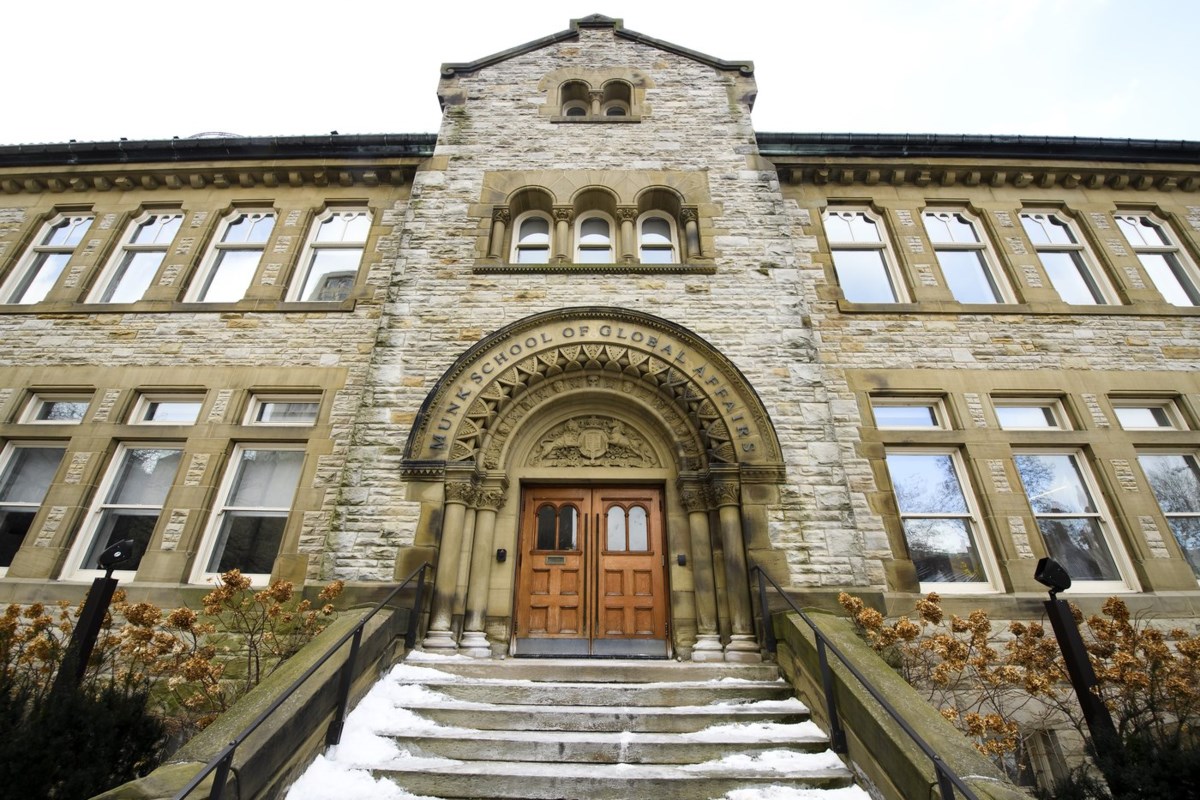
OTTAWA – Jason Stanley moved to Canada from the United States last September, leaving a high-ranking position at Yale to take a position at the Munk School of Global Affairs in Toronto.
The fascism researcher said he took this step for one reason: academic freedom.
“That’s the only reason. Nobody comes to Canada for higher wages because you don’t get higher wages. You get lower pensions, lower salaries and sometimes more teaching. So it’s academic freedom,” Stanley said in an interview with The Canadian Press.
“Canada will never be able to compete on salaries and benefits with the best private universities in the United States. It should do as much as it can, but it will never be able to match them. So what Canada can do is freedom of speech, academic freedom and democracy.”
Stanley is not alone. Postsecondary associations on both sides of the border report increased interest among American researchers in academic positions north of the 49th parallel.
Lynn Pasquerella, president of the American Association of Colleges and Universities, told The Canadian Press that many academics are feeling political pressure from state and federal governments to change how they teach and study content.
She pointed to the high-profile case of a Texas A&M philosophy professor who was told he couldn’t teach certain works by Plato – considered the father of Western philosophy – because they dealt with gender and sexuality.
“Faculty members suffer not only from burnout, but also from extraordinary moral distress as they feel compelled to make decisions they believe are unethical but feel they have no other choice,” Pasquerella said.
For this reason, Pasquerella said, American academics’ interest in opportunities at post-secondary institutions in Canada and other countries has “increased.”
Gabriel Miller, president of Universities Canada, said in an email response that his organization looks forward to announcing the first successful Canada Impact+ Research Chairs program. This federal program aims to attract global talent to Canada to advance “strategic priorities,” including health care, clean technology and artificial intelligence.
“As we eagerly await the results of the first competition, early institutional feedback suggests that the program is successful in attracting exceptionally high caliber researchers, with strong interest from American researchers and Canadian researchers seeking repatriation,” Miller said in an emailed statement.
While Universities Canada is encouraged by the federal government’s efforts to recruit top foreign talent, it is also advocating for additional financial support. It says current public funding – most of which comes from provincial governments – is not keeping pace with increased operating costs.
This problem is exacerbated by declining international tuition revenues at the post-secondary level as the government cuts the number of student visas.
Over the next decade, the federal government will invest heavily in recruiting foreign research talent in the fields of medicine, engineering, natural sciences and the humanities. The money includes a total of $1.7 billion over the next 13 years through a range of programs announced in the November budget.
The stated goal of these programs is to attract top research talent to give Canada a competitive advantage in the global economy.
Since returning to office last year, US President Donald Trump has reached multimillion-dollar settlements with several top American universities in return for restoring federal research funding.
Columbia University paid the U.S. government a $200 million settlement after the Trump administration accused the university of failing to adequately address anti-Semitism on campus during protest camps against the Israel-Hamas war.
Small protest camps have sprung up on Canadian university campuses to protest Israel’s actions during the war.
Although Canadian schools have not been fined by the federal government, Stanley described some of the political rhetoric surrounding campus protests here as having a “chilling” effect on debate on an important issue.
“I’m very sensitive because I lost so much by moving here,” Stanley said.
He said it is critical that Canada maintains a climate of open debate and free inquiry “after U.S. universities lost billions of dollars in fines and funding because their students protested against Israel.”
“You’re not going to have U.S. researchers come in and sacrifice their salaries for the same situation.”
Pasquerella agreed that Canadian institutions face their own challenges to academic freedom as long as right-wing populist movements remain a global force.
But she said her association is seeing increasing interest from American researchers looking to Canada and other countries such as Britain, Germany and Australia.
Pasquerella added that Canada’s new Citizenship by Descent law, which grants citizenship to children of Canadians born abroad before Dec. 15, 2025, is drawing interest from scholars.
“The high-caliber researchers from Yale and other prestigious institutions who have moved to Canada have set the stage,” she said. “And now that attention is focused on Americans who are able to apply for Canadian citizenship, interest has surged.”
This report by The Canadian Press was first published April 25, 2026.
– With files from The Associated Press.
David Baxter, The Canadian Press