


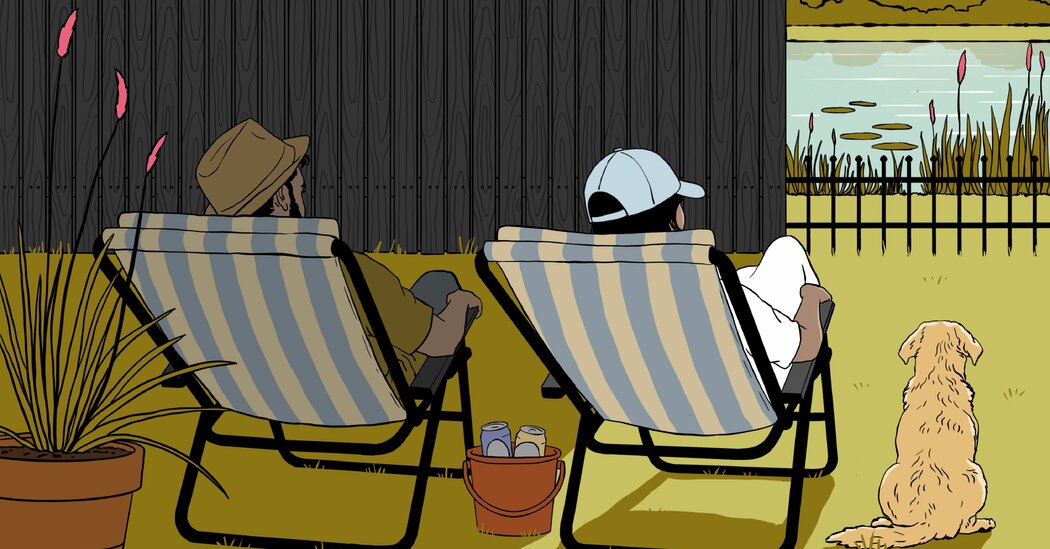
Q: I purchased a home from a homeowners association in Hamilton County, Indiana that overlooked an entire pond. I paid the contractor a premium for this view and enjoyed it for seven years. Then I got new neighbors who built a wooden fence that is almost two meters high and is right on the property line. The fence limits my view of the pond, leaving me with only about a third of the view I had before, and also violates our HOA bylaws. Can I have my HOA refund the money I paid for the view and award me damages?
A: Legally binding rules called covenants, conditions and restrictions (or “CC&Rs”) govern how your homeowners association operates. And your board should enforce these rules.
CC&Rs are typically created by the developer and run with the property, meaning they remain in effect even if the property changes hands, said Zechariah D. Yoder, who practices real estate law at Adler Attorneys in Noblesville, Indiana. These documents are a contract between property owners and also between owners and the HOA. They describe in detail what may be in the neighborhood, such as the size, material, and placement of fences.
If the fence blocking your view is actually non-compliant, you should contact the HOA. Indiana state law requires that persons involved in disputes involving HOAs address them through a dispute resolution process described in the law. Lawsuits against the association cannot begin until this process is complete.
“If there is a violation, the owner should be able to reach an informal resolution through the HOA to remove the fence,” said Thomas M. Johnston, who practices real estate law in Carmel, Indiana. If the association is uncooperative, you can go to court for an order to remove the fence, he said.
You could also try to sue the HOA for failing to enforce the CC&Rs or breaching its fiduciary duty. But that would be harder to make the case, Mr. Yoder said. Some CC&Rs allow the HOA to collect legal fees if they prevail in court. However, the opposite is not always the case. Therefore, review the HOA documents before taking legal action. The relief the court will offer would likely relate to ensuring the fence is up to code – rather than a refund of what you paid for the view, Mr Yoder said.