


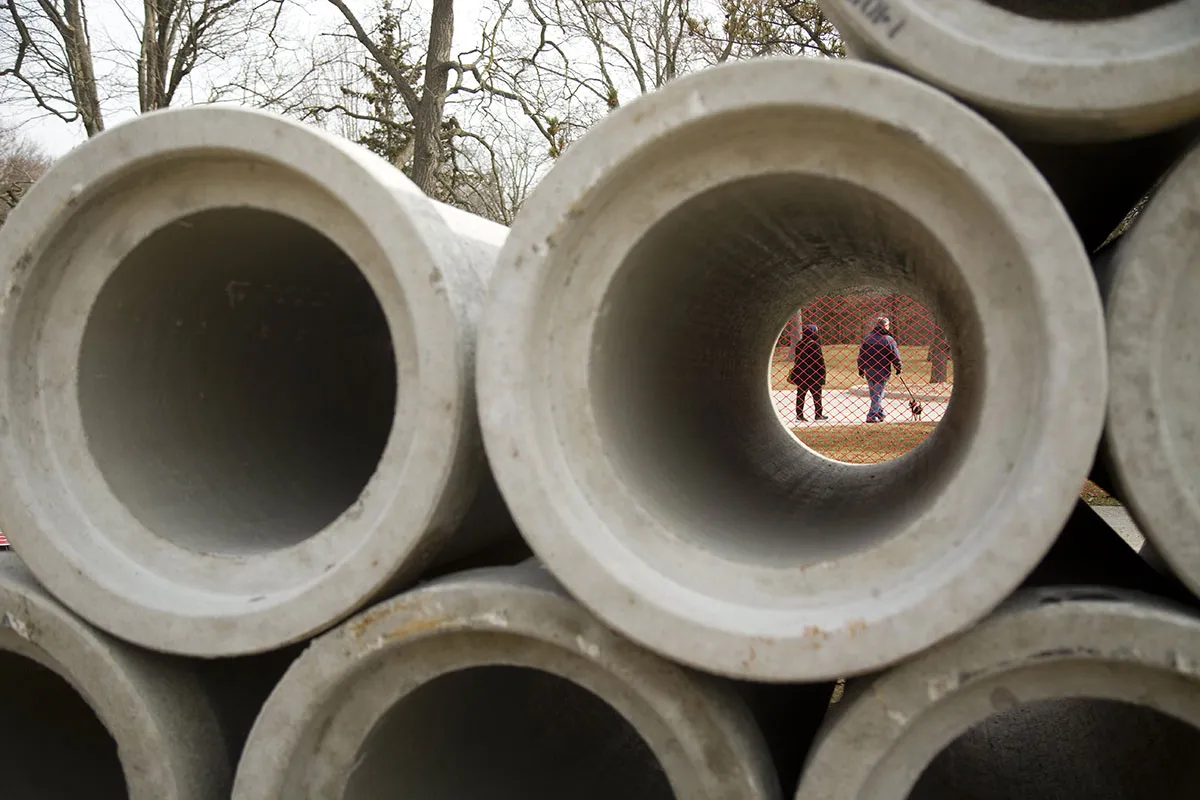
Residential development is increasingly encountering a fundamental blockage beneath the streets: water and sewer systems that cannot keep up with the growth of a city or community.
As a result, housing projects are being delayed, fewer homes are coming onto the market, and the costs of building new infrastructure are increasingly being passed on to buyers and renters.
Economists, developers and local politicians say water and wastewater systems are increasingly restricting housing construction in parts of Canada as cities and towns grapple with aging infrastructure, rapid population growth and the cost of upgrades.
For example, Killam Apartment REIT, one of the country’s largest apartment owners, said it is pausing new construction projects in Halifax, due in large part to bottlenecks in water and wastewater infrastructure. The city is undertaking a multibillion-dollar infrastructure overhaul as it struggles with capacity constraints while working with the province to speed up building permits and address pressure on existing infrastructure.
It’s not just about building permits or land availability. According to Statistics Canada, more than 11 percent of Canada’s water and wastewater facilities are in poor or very poor condition and are estimated to require more than $100 billion in upgrades.

Housing economist Mike Moffatt said water and wastewater systems built decades ago are increasingly struggling to keep up with the growth now planned – a challenge that is becoming a reality for more communities.
He said some communities had reached hard limits on their infrastructure, but many more were nearing them as population growth accelerated.
“It’s a problem,” he said, pointing to parts of eastern Ontario, the Kitchener-Waterloo region, Ontario and Greater Vancouver as areas facing infrastructure pressures.
He said many municipalities could face capacity constraints in the next five to 15 years.
“When these limits are reached, governments will have to make very expensive and capital-intensive decisions,” he said.
In smaller communities the challenge can be particularly great.
Moffatt, founding director of the Missing Middle Initiative, said communities with about 10,000 residents could struggle with infrastructure upgrades that cost $100 million to $200 million, an investment that can be difficult to justify without confidence that the growth will actually materialize.
“This will be the tip of the iceberg,” he said.
The most obvious cases are projects that are delayed because services aren’t available, he said, but the larger problem may be less visible: communities simply won’t release land for development at all because they know the infrastructure can’t support it.
Developers say the issue is already affecting decisions on the ground.
Justin Sherwood, chief operating officer of the Building Industry and Land Development Association, said constraints on water and wastewater infrastructure are popping up in some form “virtually everywhere,” particularly in fast-growing parts of Ontario.
“You can’t build a house if you don’t have a flush toilet,” he said.
He pointed to York Region, north of Toronto, where large residential developments have stalled due to wastewater capacity constraints as developers await major infrastructure expansions. For example, he said, thousands of planned homes in East Gwillimbury are effectively waiting for sewer capacity before construction can begin.
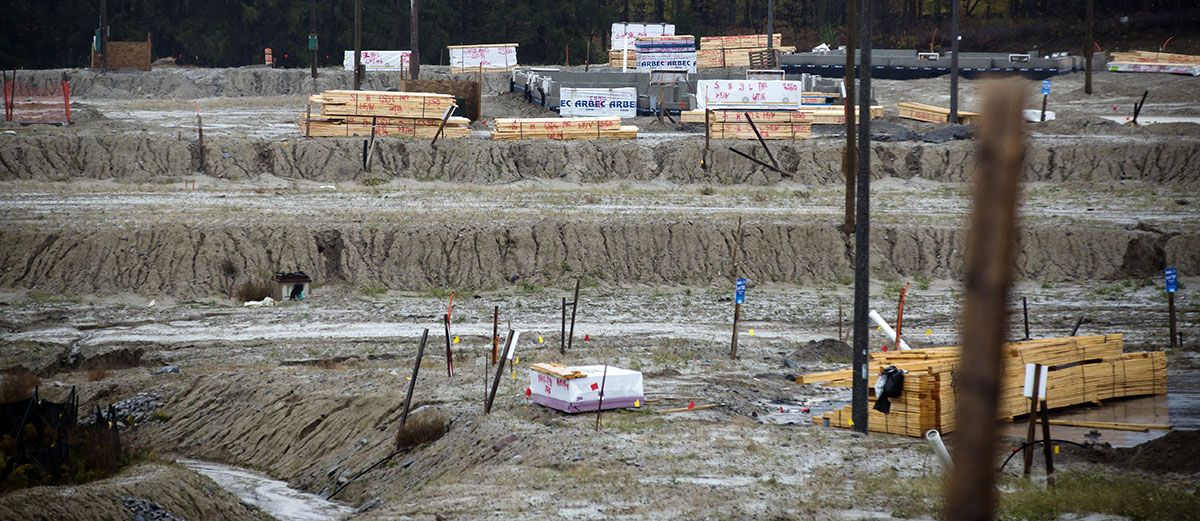
Sherwood said the issue affects both new suburban developments and denser urban projects. In some cases, developers must fund costly upgrades to local lines before higher-density projects can move forward. In other cases, entire districts are effectively paused until the regional infrastructure is expanded.
Even in established cities like Toronto, aging infrastructure can lead to limitations depending on location and system capacity.
“It’s up there,” he said, noting the importance of managing capacity given housing restrictions in some regions. “In York the channel allocation is at the top – top three, top four issues.”
The problem is not always that projects are formally rejected, said Sherwood, but that the capacity of the infrastructure shapes what can realistically happen.
“In the case of infill systems, the developer and municipal partner typically find ways to put appropriate piping into the ground,” he said. “But that increases the cost of the new project.”
Sherwood said development costs in parts of the Greater Toronto Area can reach $130,000 to $140,000 per unit, with much of that tied to the cost of water and wastewater infrastructure needed to support new housing.
Local politicians say these pressures are becoming increasingly difficult to manage as infrastructure ages and population growth increases.
The result, said Rebecca Bligh, president of the Federation of Canadian Municipalities and a Vancouver city councillor, is that municipalities are increasingly limited in how quickly they can move forward with housing approvals.
“When it comes to water and wastewater infrastructure, it is all about planning and forecasting for both new and renewal of existing infrastructure,” she said. “It affects local authorities’ ability to move quickly on housing approvals.”
Bligh said the challenge varied across the country. Smaller municipalities face disproportionate pressure due to limited tax bases and reduced administrative capacity, while larger cities struggle with aging systems and increasing demand.
She pointed to Toronto, where sewer infrastructure limitations have contributed to delays for more than 60,000 homes, and London, Ontario, where several years of upgrades are needed before further housing construction can move forward.
Bligh said existing federal funding tools, including the $51 billion Build Communities Strong Fund, are important but need to be implemented more quickly and directly to keep up with demand for housing and infrastructure.
She said municipalities rely largely on property taxes and user fees for their revenue, which account for about a tenth of total government revenue in Canada, even though they are responsible for much of the local core infrastructure.
“We know what we have to do,” she said. “The concern is that we don’t have the financial capacity to deliver this at the speed and scale that the housing targets require.”
The issue is attracting renewed attention at senior levels of government. An $8.8 billion housing-supporting infrastructure fund announced by Ottawa and Ontario earlier this year aims to expand water, wastewater and related utility capacity for new housing.
The program is designed to help municipalities finance major infrastructure upgrades while reducing some of the upfront costs passed on to developers. But local politicians say the impact will depend on how quickly the funds flow and whether they keep up with rapidly growing demand.
Even with new funding programs, Moffatt said the challenge is unlikely to go away anytime soon. Many municipalities are reaching their capacity limits while the costs of expanding water and wastewater infrastructure continue to rise.
Sherwood said the issue went beyond housing permits and spoke to the broader role infrastructure plays in supporting communities.
“Why should people care about this topic?” he said. “It is in everyone’s interest that Canadian cities and towns have modern infrastructure capable of supporting the social and economic needs of a growing, dynamic country.”
• Email: arankin@postmedia.com