


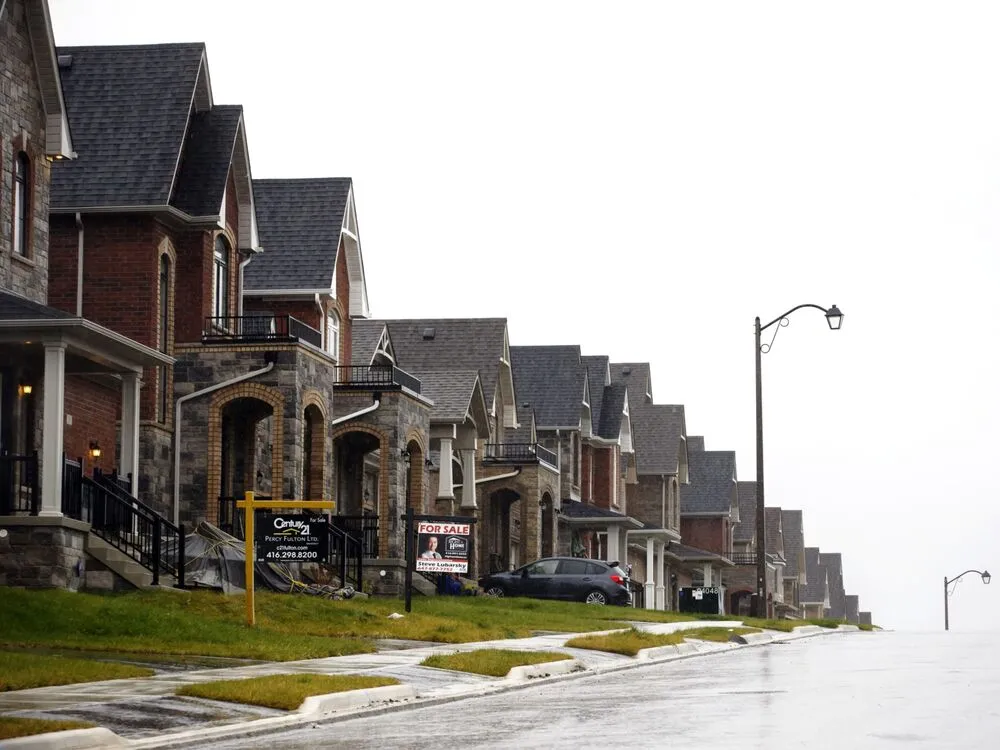
Canada’s housing crisis, once characterized solely by a critical shortage of supply, is now facing the heightened challenge of declining sales.
Over the past year, sales have declined in major centers across the country, particularly in the Greater Toronto Area (GTA), where the housing shortage remains greatest. According to the Toronto Regional Real Estate Board, home sales in the GTA fell 11.2 per cent in 2025 and are now down 63 per cent for single-family homes and 89 per cent for condos compared to the 10-year average. In January, home sales fell 19.3 percent year-over-year.
Sales are falling not because Canadians have given up on buying a home, but because consumer confidence has fallen due to trade tensions and a slowing economy. Buyers are also confused by delays in implementing government measures, such as a promise to remove sales tax from new homes for first-time buyers.
If these sales volumes do not recover, housing construction will continue to grind to a halt.
But Canada can’t afford to stop building – even in a downturn. We simply need too much more housing of all kinds. We need it for Canadians who want to buy homes and for those whose job it is to build them.
The federal government is already removing its share of the GST/HST from all new homes for first-time buyers, a move that has been delayed due to the length of time it takes to pass the law. Ontario also plans to eliminate its share of the HST, again only for first-time buyers.
Housing is an ecosystem and to really get the sector going we need to encourage all consumers, not just first-time buyers. Both governments can achieve this by immediately extending the GST/HST reduction to all new homebuyers, a new survey from Abacus Data confirms in January for Mattamy Homes.
According to the survey of nearly 2,500 people, a third of the 52 per cent of Canadians who plan to buy a home say they have postponed the purchase in the past year because homes are too expensive. Of these cautious but active shoppers, 59 percent say an extended GST rebate would increase the likelihood of purchasing.
Of Canadians who have owned or currently own a home, 39 per cent say they would be more inclined to buy if the GST rebate was extended to them. The impact is strongest among cost-sensitive buyers who don’t want to buy for the first time but have delayed their purchase due to high costs: 79 percent say the cut would make them more likely to buy a new home.
In Ontario, the numbers show a similar picture: extending the rebate to all new home buyers would increase sales. In this province, 65 percent of prospective buyers say they would be at least slightly more likely to purchase if the HST were eliminated. Of those who have delayed a purchase because of the cost, the figure is 76 percent.
These Canadians are more than just numbers on a page. These are families in too-small apartments who are delaying the birth of another child because they cannot afford an apartment large enough to accommodate their growing family. They are seniors who would like to live closer to their grandchildren and free up their single-family home for a condo in the city. These are people who commute for hours to work every day because the cost of moving near their workplace is prohibitive.
These are just a few examples of Canadian homeowners who need both levels of government to extend the HST cut.
Additionally, if sales don’t increase, thousands of good, well-paying jobs could be at risk.
If housing construction stalls, a total of 41,000 jobs would be lost in the GTA, according to a report from the Building Industry and Land Development Association. Of those, 18,500 jobs are directly related to housing construction (a little less than half of the GTA’s direct housing construction workforce) and another 21,000 indirect jobs would be lost.
The same report said the total fiscal impact of these job losses would be about $6.5 billion per year due to reduced tax revenues across all three levels of government.
The reality is that many construction companies have their projects completed but lack the sales numbers to move forward. Cutting decades of bureaucracy and hidden taxes (e.g. development fees) embedded in the housing system is important, but it will take time for these measures to have their full impact.
Only expanding eligibility for the GST/HST rebate will have the immediate impact needed to boost home sales and, in turn, keep the shovels in the ground and create the jobs that move them.
Canadians need less taxes on their homes. Our country needs more housing and our economy needs the jobs created by a healthy homebuilding industry. The government can act by extending the HST rebate to all new home buyers and creating the conditions for the entire housing ecosystem to thrive. The time to act is now.
Brad Carr is Managing Director of Mattamy Homes Canada.