


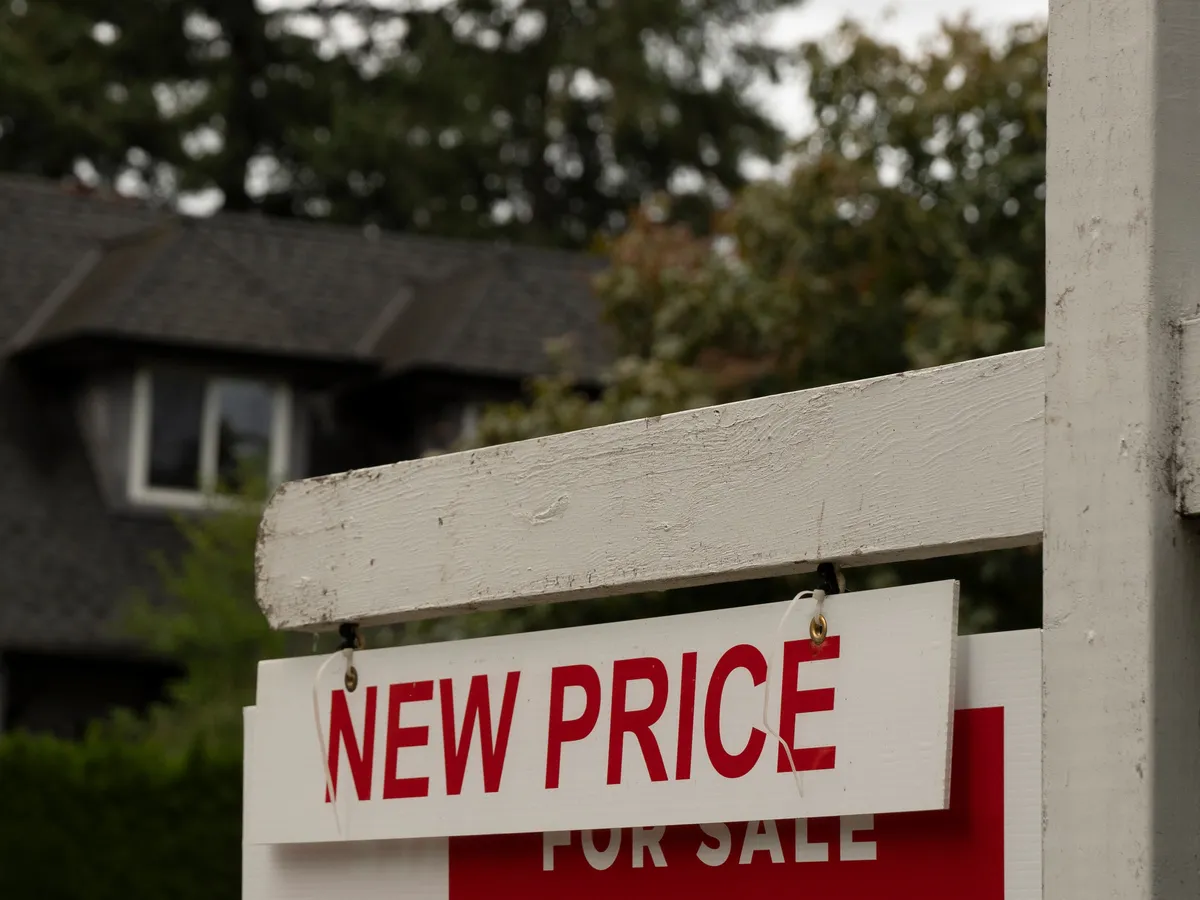
House prices continue to fall or remain flat in major centers across the country, a potential dilemma for those counting on their homes as part of their retirement savings.
The Toronto Regional Real Estate Board reported this week that in Canada’s largest city, the average sales price was $1,051,969 in April, down 4.9 per cent from a year ago. Based on the index, prices have fallen by more than 20 percent from the peak. The story is similar elsewhere; Vancouver property prices were almost seven per cent lower in April than a year ago.
In the fourth quarter of 2025, household residential real estate fell 0.2 per cent year-on-year to $8,450.6 billion, according to the latest data from Statistics Canada. The good news is that at the same time, the value of all assets minus all liabilities for Canadians increased by $230.2 billion to $18,594.9 billion.
Of course, wealth is not evenly distributed across Canada and, according to Statistics Canada, 20 per cent of the country owns about 65 per cent of the net worth, with many benefiting from an S&P/TSX composite index that rose 28.2 per cent in 2025 and is up another about seven per cent this year.
The problem exists for those who have a lot of their wealth tied up in their primary residence and may want to access that money at some point in retirement. It’s just not worth that much now.
And while there’s no doubt that long-term homeowners have seen a huge increase in the value of their nest eggs, the question is, will the decline in property values over the last two years make enough of a difference that some people will have to rethink their retirement planning?
Robert Kavcic, a senior economist at Bank of Montreal, said prices could vary across markets, but in some cities like Toronto and Vancouver prices could stay the same or fall. “Incomes have to keep up with affordability,” he said.
If your home accounts for 50 percent of your net worth — Which might not be unusual for someone with a $1 or $2 million single-family home in Toronto or Vancouver — If you lost $200,000 to $400,000, how much would your retirement thinking change?
The equity growth that older Canadians have already built may not have a significant impact on retirement income from their homes, Kavcic said. “Anyone approaching retirement age has more than a decade of equity (growth), so you’re putting down 20 percent, but you probably didn’t set your retirement plan based on five years ago,” he said. Real estate assets are like paper assets on the balance sheet and do not change cash flow, he added.
However, counting on downsizing to fund retirement is risky, said certified financial planner Jason Heath.
“In practice, I see a lot of retirees aging in place and not downsizing. Even those who thought they would downsize earlier in their financial life in retirement (don’t),” he said. “Something I’m a little worried about is people holding on to a recovery in hopes of finding the right time for the market.”
“Where do people go?” asked Jason Mercer, chief information officer of the Toronto Regional Real Estate Board, citing the lack of other downsizing options for retirees to move to so they can take advantage of their housing assets.
Dan Eisner, founder and CEO of True North Mortgage, said for those who plan to get value out of their home while they live there, he doesn’t see many people retiring with debt, but even a paid-off home is difficult to leverage because a traditional mortgage loan is difficult to qualify for in retirement.
“The reverse mortgage has become increasingly popular,” Eisner said of the product, which generally allows you to access 55 percent of the equity in your home with no mortgage payments. However, it ultimately reduces the equity in your home when you move.
“The biggest difference with a Mortgage Home Equity Line of Credit (or HELOC) is that you must have the income to support the payment; with a reverse mortgage, you don’t need to.”
But when prices fall, reverse mortgages are affected. “Your property just isn’t worth as much anymore,” Eisner said. “Even if you just want to take some money and invest it in some of the exchange-traded funds to generate income, your money is worth less. So that’s concerning.”
Anthony Scipilipoto, president and CEO of Veritas Group of Companies, said the immediate impact of the decline is the so-called “wealth effect,” which is the idea that people spend more when they feel they have more money.
“It doesn’t matter how rich you are. You start to think a little differently,” Scipipoto said of paper losses. “Things just start bothering you. You save a little bit because you’re depressed. You do something that’s a little less costly.”
Would people actually work a little longer if the value of their homes stopped increasing? Scipioto said maybe, but it depends on how much of your house is your nest egg. “This would all be exacerbated if we had a downturn in the stock market,” Scipilipoto said.
Heath said some homeowners may delay retirement and work a little longer if their homes have fallen in value, but said he believes exposure to the stock market could insulate them.
The other impact could be what these values say to younger generations as they observe a real estate market that doesn’t see much activity.
“People might reconsider giving their kids money to buy a house… (as) just not a good investment,” Scipilipoto said. “We’re already seeing that.”
Housing can make behavioral sense because you take out a mortgage and have a compulsory savings plan. The government is even encouraging people to withdraw up to $60,000 from their retirement funds and pay it back over 15 years to get into the real estate market.
But the flaw in the plan to use a home as a retirement piggy bank is that you have to sell it or take out loans to get the money.
And if property values don’t rise or even continue to fall, the idea of using a house as a nest egg for retirement seems to be failing.
• Email: gmarr@postmedia.com