


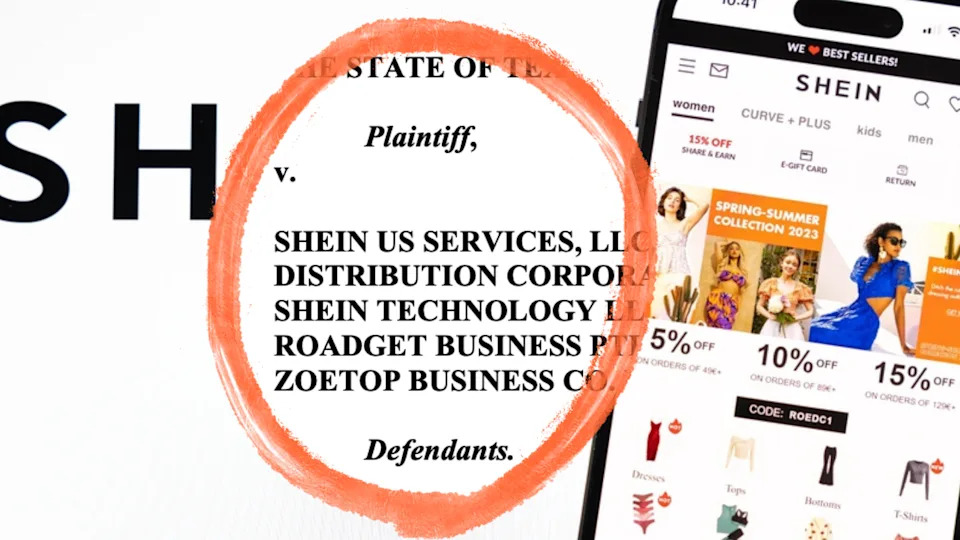
Image of a person shopping on the Shein website using their cell phone (inlay), screenshot from a lawsuit filed by the Texas Attorney General
Fast-fashion brand Shein has built a loyal following in Canada by promising ultra-low prices — dresses for $8, jeans for $12, complete back-to-school wardrobes for under $100. But a comprehensive lawsuit filed by the Texas attorney general in February 2026, coupled with independent laboratory testing, raises a question that no price tag can answer: What exactly is in these garments?
The short answer, according to Greenpeace Germany’s lawsuit and testing, is a toxic cocktail containing “forever chemicals” (perfluoroalkyl and polyfluoroalkyl substances, or PFAS), phthalates, and lead – some of them at concentrations that far exceed safety limits in the European Union (EU) and the United States (1).
Don’t miss it
Canada does not have a comprehensive federal testing program for chemical levels in imported clothing. Health Canada does not examine, test or approve apparel products before they are sold online or in stores. Instead, the responsibility lies with the importer or company to ensure that products comply with the Canada Consumer Product Safety Act. This law bans dangerous substances like lead and PFAS, but manufacturers often exploit a loophole by claiming that these chemicals are “incidental” (2).
Shein has denied claims of toxic products, despite the state of Texas filing a lawsuit against the fast fashion company.
What if your budgeting tool actually helped you make money? Discover Canadian apps that offer high-interest savings and reimbursement for your everyday expenses. Compare the top rated savings apps to start saving and earning.
What the lawsuit and lab tests actually showed
In February 2026, Texas Attorney General Ken Paxton filed a lawsuit against Shein in Collin County District Court, alleging that the company violated the Texas Deceptive Trade Practices Act by selling products described in court documents as “silent carriers of poison.” The lawsuit focuses specifically on children’s products and clothing worn by pregnant women (3).
The specific allegations include:
-
PFAS in outerwear: Greenpeace Germany published laboratory results in late 2025 indicating that seven Shein jackets contained PFAS at levels up to 3,300 times the EU limit (4).
-
Phthalates in children’s products: South Korean government testing cited in the lawsuit found that some children’s shoes and accessories had phthalate levels up to 428 times the legal limit.
-
Lead and formaldehyde: The Texas lawsuit also alleges the presence of lead and formaldehyde in children’s clothing and accessories.
The story continues
Shein has denied the allegations. The company says it conducts millions of its own safety tests annually and that its products meet applicable regulatory standards.
Read more: Here are the 3 net worth milestones that change everything for Canadians (and what they say about you)
Why this matters to Canadian buyers
Canada has no EU-equivalent restrictions on PFAS in textiles, and the Canada Border Services Agency (CBSA) does not routinely test imported garments for chemical content. Health Canada may take enforcement action if a product is found to be dangerous under the Canada Consumer Product Safety Act (CCPSA). However, this process typically occurs after reporting damage or targeted sampling – rather than after checking each shipment before arrival.
This is important in practice as Shein operates one of the highest volume parcel import streams into Canada. The platform lists thousands of new styles every day and ships them directly to consumers. This bypasses the retail on-shelf testing infrastructure that traditional importers must follow.
PFAS are particularly concerning because they accumulate in the body over time and have been linked by health researchers to hormone disruption, effects on the immune system and certain types of cancer. Due to developmental sensitivity, children and pregnant women are at greatest risk. Phthalates, used to soften plastics and found in accessories such as bags and shoes, are considered regulated endocrine disruptors in Canada under rules banning certain toxic substances – but enforcement depends on discovery.
What you can do now
Shein’s case has not been resolved in court and the allegations have not been proven. But the independent laboratory tests from Greenpeace Germany stand on their own. The findings were collected and published separately from the lawsuit, giving Canadian buyers plenty of reason to pay attention.
Ideally, anyone who has purchased Shein products can reduce harmful exposure by eliminating and replacing these items; However, for Canadians who already rely on fast fashion for affordability reasons, this trade-off isn’t easy.
While it may seem optimal to replace an entire wardrobe with certified organic clothing, this is not practical for many Canadians. Instead, a more practical approach is to reduce potentially harmful exposures by eliminating or replacing the items most at risk – children’s clothing, items worn against the skin for long periods of time, and products with rubberized coatings or waterproof surfaces.
High interest rates are the ultimate budget killer. Switch your balance to the MBNA True Line® Mastercard® with a 0% introductory interest rate to stop paying off debt and start paying for your future. Check out low-interest card options at Money.ca.
If possible, consider the following when shopping for clothing and accessories:
-
Prioritize natural fibers—cotton, linen, and wool—for items that will be worn close to the skin, especially children’s pajamas, underwear, and base layers.
-
Wash new clothing at least once before wearing. This reduces chemical residue on the surface but does not remove absorbed chemicals.
-
Avoid Shein sportswear, waterproof outerwear and children’s accessories until further testing is available – these categories are most likely to receive chemical treatments.
-
If you have recently purchased Shein products, you should report concerns to Health Canada’s Consumer Product Safety Complaint Line at canada.ca/en/health-canada/services/consumer-product-safety.
-
Regularly check the Competition Bureau of Canada and Health Canada recall database at healthycanadians.gc.ca for updates on fast fashion product recalls.
What to read next
Join 19,000+ readers and get Money.ca’s best stories and exclusive interviews first – clear insights, curated and delivered weekly. Subscribe now.
Article Sources
We rely exclusively on verified sources and credible third-party reports. Please see our Ethics Policy and Guidelines for details.
Attorney General of Texas (1),(3); CBC (2); Greenpeace Germany (4)
This article originally appeared on Money.ca under the title: Shein clothing tested at 3,300 times the safe chemical limit – and Canada has no system in place to catch them at the border
This article is for informational purposes only and should not be construed as advice. The provision is made without any guarantee.