


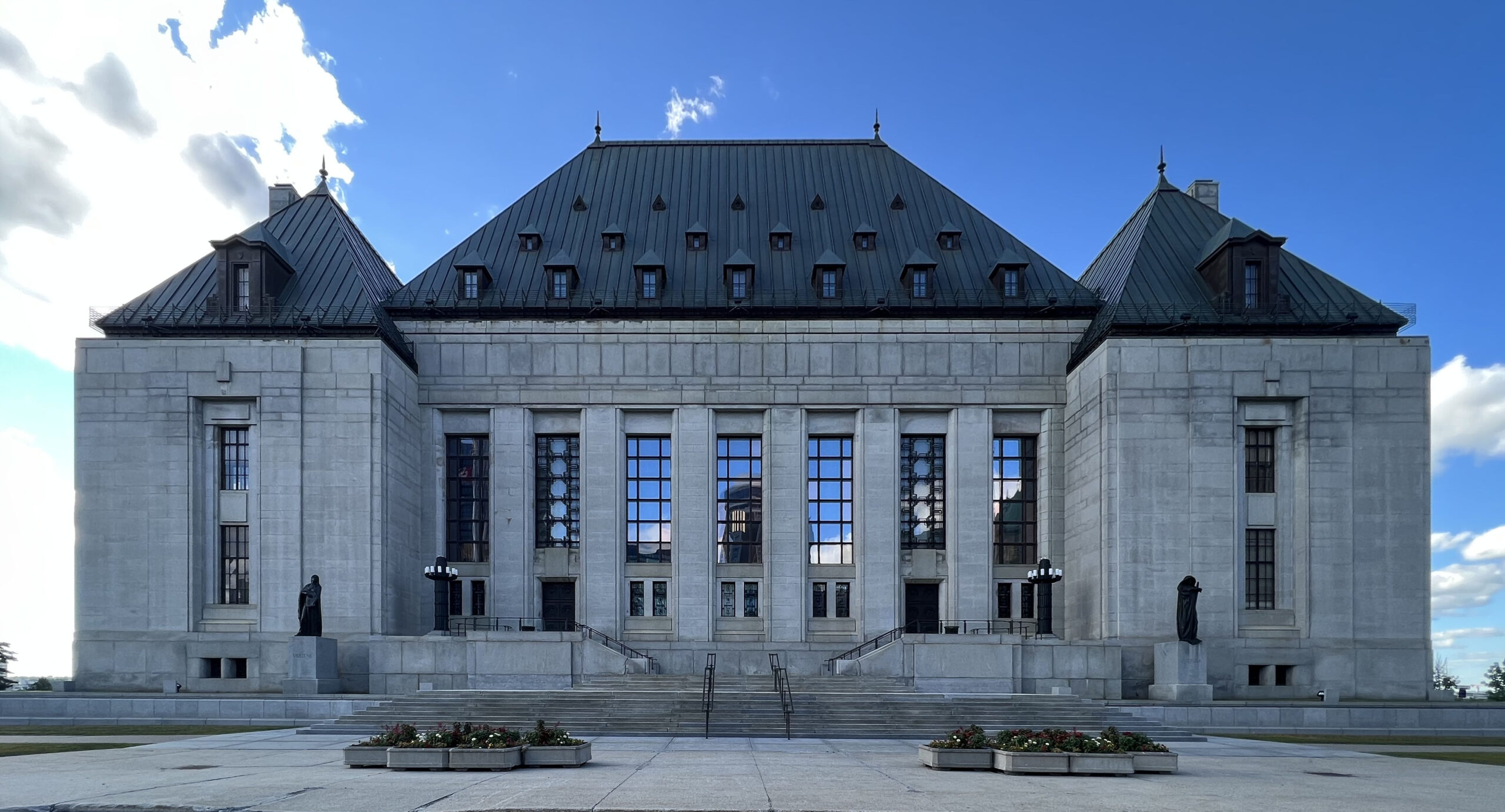
The Supreme Court of Canada (SCC) has struck down Quebec’s law that suspended review of an electoral map by an independent commission until after the next general election, according to reasons released Friday. The court ruled by a majority of 7-2 that the legislation violated the right to vote under Section 3 of the Canadian Charter of Rights and Freedoms.
The contested legislation would suspend the work of the Commission de la représentation électorale. This is an independent commission that reviews the boundaries of each electoral district before every other general election, as required by the Provincial Elections Act. Periodic review of the electoral map ensures that each district represents a community based on its population, natural local boundaries, and other sociological considerations.
The provincial government intended the suspension to buy time to develop a long-term plan to address the inevitable disappearance of remote regions with declining populations while preserving those regions. However, Justice Nicholas Kasirer in the majority affirmed the lower court’s conclusion that there was no rational connection between the protection of these remote regions and the suspension of the Commission’s independent review work. The essential aim of the legislation, according to the majority, was to preserve electoral districts in Gaspésie, a remote and sparsely populated region.
The majority also held that the suspension of the commission’s work did not constitute a minor impairment of the right to vote. The ruling noted that the legislature could have temporarily retained the electoral districts in Gaspésie and allowed the commission to review the remaining districts in the province.
Justices Suzanne Côté and Malcolm Rowe dissented. They ruled that the law was constitutional because it was within a range of reasonable solutions and that the court should have left the decision to the legislature. They would also have accepted that the aim of the law was what the government had stated.
The Charter’s right to vote includes the right to effective representation, which requires that citizens’ voting rights be relatively equal. With regard to provincial legislative constituencies, the Court has previously held that provincial governments must maintain voter fairness when drawing up electoral maps, taking into account geographical location and community interests.
In particular, the 1991 SCC ruling found that a deviation of 25 percent from the provincial electoral quotient – the average population per electoral district in a province – was acceptable. This threshold is also codified in Section 16 of the Quebec Electoral Code. According to a 2010 study by the University of Toronto, Canada is the worst violator of the principle of population representation among federal states. According to the Canadian Broadcasting Corporation, voter inequality in Quebec resulted in the current ruling party, the Coalition Avenir Québec, winning 72 percent of the seats in the provincial parliament while only receiving 41 percent of the vote. Without advocating a revision to the threshold, the British Columbia Civil Liberties Association asked the court to require stronger justification for a greater departure from the 25 percent threshold.