


Canadians are getting a pay raise this year, albeit a little more modest than originally planned. However, if you work for a nonprofit, you can expect a larger increase.
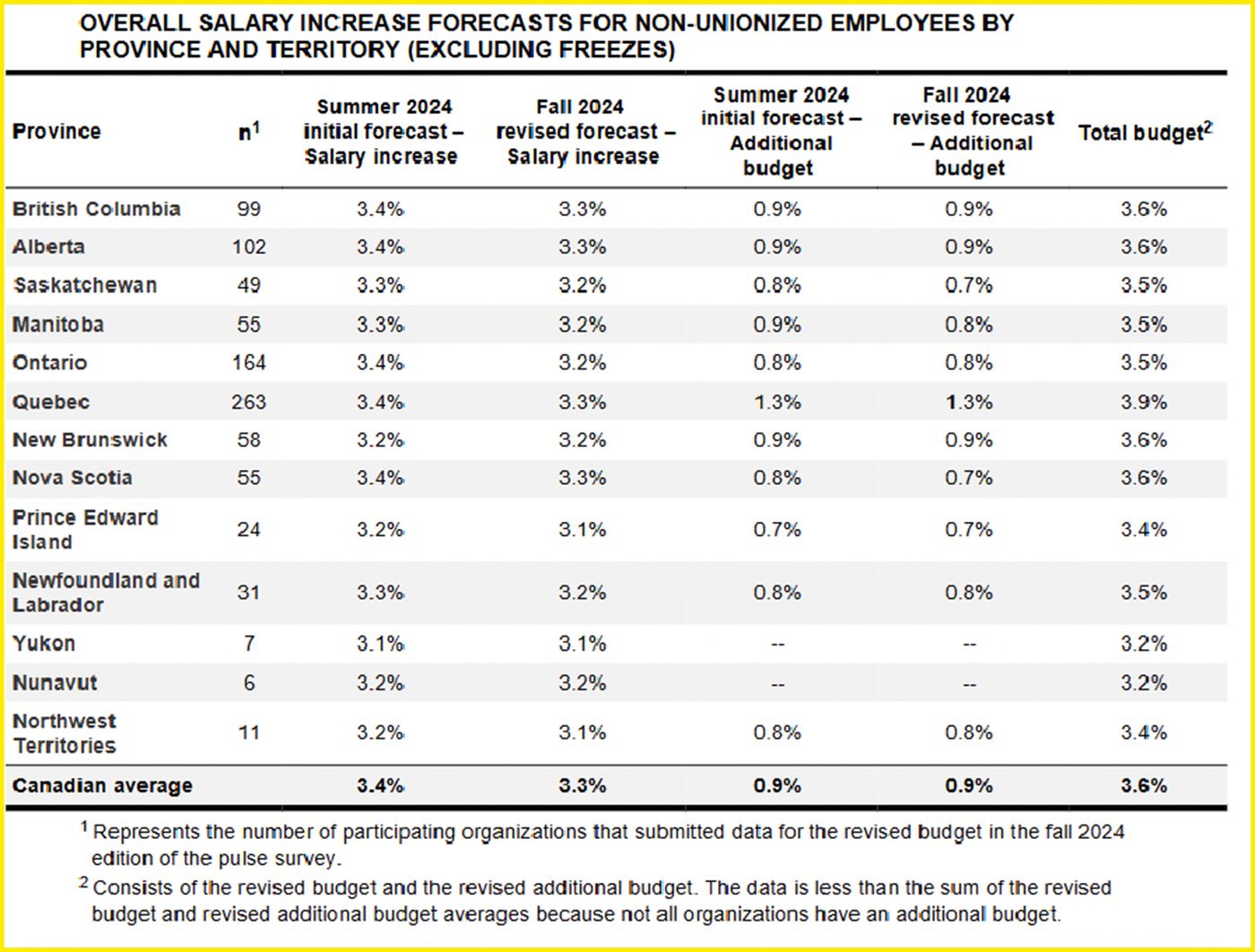
Normandin Beaudry, an actuarial consulting service, surveyed nearly 400 Canadian organizations in November 2024 and found that the salary increase budget for 2025 is 3.3 percent. That is only slightly less than the original forecast of 3.4 percent from summer 2024.
“Companies are trying to find the right balance between retaining top talent and managing their compensation spend to remain agile and competitive in an evolving and uncertain geopolitical landscape,” said Darcy Clark, senior principal of compensation at Normandin Beaudry.
Normandin Beaudry
The 3.3 per cent wage increase is lower than in 2024, when Canadian workers received an average wage increase of 3.6 per cent.
However, salary increases have declined over the years. That's because pay raise budgets are slowly returning to pre-pandemic levels as the labor market “balances and inflation pressures ease.”
“While the 2025 forecast is less aggressive than last year's 3.6 percent, it is important to note that it remains above historical norms and exceeds current inflation rates,” Clark said.

Normandin Beaudry
A closer look shows that 68 percent of organizations participating in the survey stuck to their original 2025 budget. However, 65 percent of organizations that made changes reduced their original budgets, citing cost reductions as the main reason.
In addition, 42 percent of companies said they set aside an average budget of 0.9 percent.
“By reserving these resources, companies are better able to address potential challenges in the next compensation cycle,” Clark said.
Nonprofit workers see highest wage increases
The average increase depends on the type of company or organization you work for. Average budget projections for overall salary increase by ownership structure include:
- Nonprofit organizations: 4.1 percent
- Privately held organizations (not listed): 3.9 percent
- Listed organizations (listed): 3.4 percent
- Government organizations/Crown corporations: 3.6 percent
Your salary increase also depends on your industry.
Workers in electronic games and visual effects, transportation and warehousing, and telecommunications and data processing are expected to see the smallest wage increases. In comparison, employees in finance and insurance, public sector, pharmaceutical and biotechnology industries are expected to see the highest wage increases.
As budgets shrink, companies must look for ways to remain competitive beyond cash compensation. As a result, 58 percent plan to remain competitive across their rewards programs, 57 percent want to focus on employee engagement and communications, and 32 percent will review their job architecture and hierarchy.
“Prioritizing these areas can help companies ensure they are better supporting their employees, while increasing understanding and appreciation of the programs in place to support talent development and growth,” the report said.
Main photo by
Diego Grandi/Shutterstock.com