


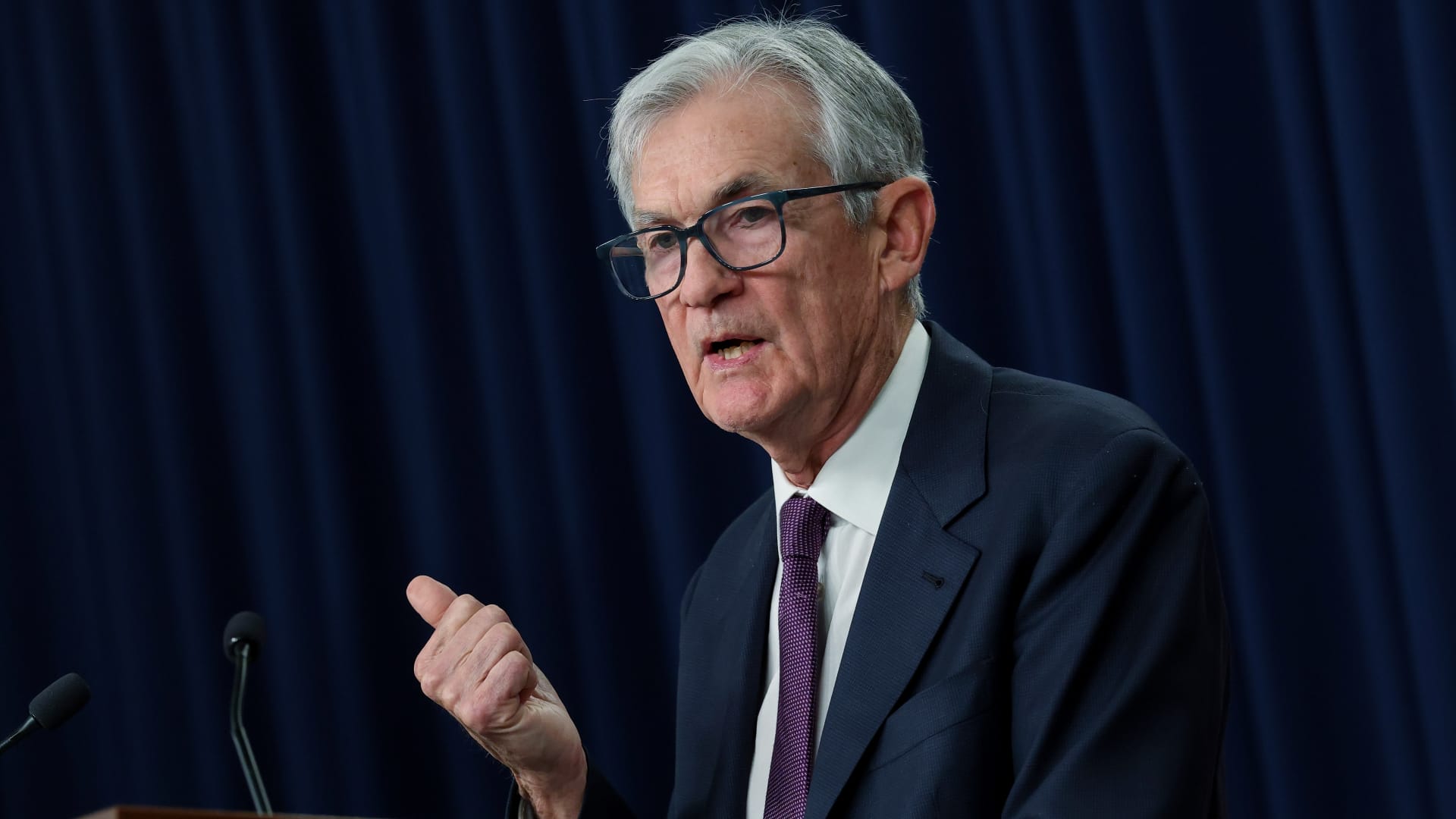
Federal Reserve Chairman Jerome Powell speaks during a press conference following the Federal Open Markets Committee meeting at the Federal Reserve on March 18, 2026 in Washington, DC.
Anna Moneymaker | Getty Images
Federal Reserve officials still expected to cut interest rates this year at their March meeting, despite high levels of uncertainty from the Iran war and tariffs, according to minutes released Wednesday.
Most participants said the war could require easing monetary policy if rising gas prices weigh on the labor market and consumers’ wallets.
Policymakers said they needed to remain “flexible” as they weighed the war’s impact on inflation, which remained above the Fed’s target, and on hiring, which was largely stagnant over the past year.
“Many participants believed that over time it would likely be appropriate to lower the target range for the policy rate if inflation fell in line with their expectations,” the minutes said.
The consensus was for a cut this year, unchanged from the last update in December.
The summary then went on to warn of “a further weakening in labor market conditions that could justify further interest rate cuts, as significantly higher oil prices could reduce household purchasing power, tighten financing conditions and reduce growth abroad.”
Ultimately, the Federal Open Market Committee voted 11-1 to keep the target benchmark federal funds rate in a range between 3.5% and 3.75%.
Possible hike?
The consensus was to keep interest rates stable while they monitor the situation as it develops, with officials also expressing concerns that hostilities in the Middle East could lead to persistent inflation that could necessitate interest rate hikes.
“Most participants indicated that it was too early to know how developments in the Middle East would affect the U.S. economy and considered it prudent to continue to monitor the situation and assess the impact on the appropriate stance of monetary policy,” the minutes said.
The March 17-18 meeting came just weeks after the U.S. and Israeli attack on Iran, which sparked a rise in energy costs and fresh fears of a rise in inflation. A ceasefire announced on Tuesday evening led to a sharp fall in oil prices, although the durability of the agreement is still highly questionable.
Assessing the situation so far, participants at the meeting said they still expected inflation to continue moving toward the Fed’s 2 percent target despite the turmoil caused by the war. They noted that tariffs continue to pose a threat, although most view the impact of tariffs as temporary when it comes to calculating inflation.
Chairman Jerome Powell said in a recent public appearance that raising interest rates now to stave off a rise in inflation could have longer-term negative effects given the lagged impact of the Fed’s interest rate moves.
At the same time, officials expressed concern about the labor market, which has created enough jobs to keep the unemployment rate stable. However, employment growth came almost entirely from healthcare-related sectors, raising concerns about stability and growth potential.
“The vast majority of participants were of the opinion that the risks to the employment side of the mandate were skewed to the downside,” the minutes said. “In particular, many participants warned that labor market conditions appear vulnerable to negative shocks in the current situation of low net job creation.”
Markets largely expect the Fed to maintain interest rate policy for the rest of the year. However, the ceasefire prompted traders to increase the chances of a possible cut.
Broadly speaking, the economy has shown signs of slowing, prompting some on Wall Street to raise their expectations of a recession.
Gross domestic product rose by only 0.7% in the fourth quarter of 2025 and is expected to only reach a growth rate of 1.3% in the first quarter of 2026.
Choose CNBC as your preferred source on Google and never miss a moment from the most trusted name in business news.