


Burnt trees from the Palisades fire and windblown dust are seen at Will Rogers State Park in the Pacific Palisades neighborhood in Los Angeles, California, on January 15, 2025, with the city of Los Angeles in the background.
Apu Gomes | Getty Images
Insurance premiums were skyrocketing long before the massive wildfires in the Los Angeles area this year.
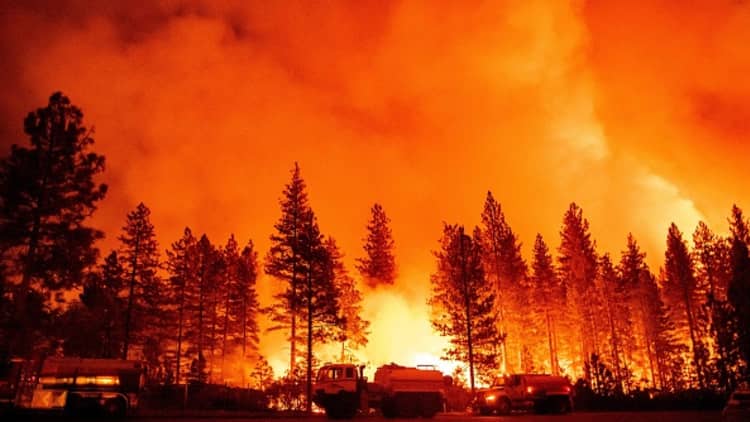
Now they are likely to rise even further as the Los Angeles wildfires could become the costliest fire in US history, according to analysts.
JPMorgan and Wells Fargo estimate that insured losses could cost more than $20 billion.
More from Personal Finance:
Wildfire victims may be eligible for a one-time payment of $770
What homeowners and renters should do after a wildfire
Top charities working to fight wildfires
For California residents, the increasing frequency and severity of natural disasters has had a direct impact on homeowners' insurance costs, a trend that is now expected to accelerate.
“In the near term, insurance regulators need to allow risk-based pricing,” Patrick Douville, vice president of global insurance and fixed income ratings at Morningstar, said in a statement. “This means premiums are likely to rise and affordability issues will persist, potentially impacting property values and leaving some homeowners without insurance.”
The California Department of Insurance also recently passed regulations that pave the way for rate increases in exchange for increased coverage in wildfire-prone regions. Some insurance companies in the state increased rates by as much as 34% in 2024, according to the San Francisco Chronicle.
Although it's still too early to predict how the Southern California fires will directly impact the bottom line, filing one fire claim can increase premiums by 29% on average, and two claims could increase premiums by 60%, according to one Analysis of Insure from 2024.com.
According to Janet Ruiz, director of the Insurance Information Institute and the organization's representative in California, premiums are almost guaranteed to rise in the future as insurers try to cover their costs.
“We need to make enough premiums to pay the claims,” she said.
But for homeowners outside of California, worsening extreme weather also means higher insurance premiums are on the horizon.
How disasters can affect costs in other states
The rest of the country also wants to know: Will my insurance premiums go up? According to Ruiz, the short answer is no.
“Homeowners and business owners in one state do not pay insurance premiums for damage or disasters in other states,” she said.
Because each state has an insurance department that regulates rates in that region, there are protections in place to prevent this from happening, Ruiz said.
And yet, even though insurance premiums are subject to extensive state-level regulation, when insurers cannot adjust their rates in heavily regulated states, they compensate by raising rates in less regulated states – despite protections in place – resulting in “a growing discrepancy.” leads between insurance premiums and risk,” says a 2021 paper by economists from Harvard Business School, Columbia Business School and the Federal Reserve Board.
“Our findings call into question the sustainability of the current regulatory system, particularly as natural disasters become more frequent or severe,” the authors write.
“Many insurance companies operate nationwide or at least in multiple states,” said Holden Lewis, mortgage and real estate expert at NerdWallet.
“They’re going to recoup their losses somewhere,” Lewis said.

After the wildfires, Michael Barrett, co-director of Barrett Insurance Agency in St. Johnsbury, Vermont, where state insurance regulations are more relaxed, said he fielded numerous calls from customers asking if their premium would go up — “and the reality.” .” “The real answer is that it would be possible,” he said.
“From an underwriting perspective, an increase in natural catastrophes will impact insurance in the future,” Barrett said.
Vermont hasn't been immune to its own extreme weather lately.
“We had incredible rainfall with severe flooding,” Barrett said. “This is very concerning as we see that reliance on insurance has increased as a result of these events.”
Extreme weather is a problem nationwide
What happened in California underscores what could happen in other parts of the country, in part because of rising climate concerns.
Last year, 27 different natural disasters, from wildfires to winter storms, cost $1 billion each, the National Oceanic and Atmospheric Administration found.
According to a separate report from Realtor.com, nearly half of all homes in the U.S. are currently at risk of severe or extreme damage from environmental threats.
Annual premiums are increasing
According to S&P Global Market Intelligence, home insurance rates increased 33.8% between 2018 and 2023, in part due to increasing weather-related risks, and increased 11.3% in 2023 alone.
A working paper published by the National Bureau of Economic Research found that average premiums will increase even more sharply, by 33%, between 2020 and 2023, and that climate-exposed households will face $700 higher annual premiums by 2053.
According to Bankrate, the national average cost of home insurance now averages $2,181 per year for a policy with a home limit of $300,000, which works out to about $182 per month.
What each homeowner pays depends on the home as well as the city, state and proximity to areas prone to floods, earthquakes or wildfires, among other things, experts say.
But in general, all of these factors have caused costs to rise across the board, including the impact of extreme weather and the rising costs of repairs or reconstruction.
Rising repair costs also play a role
Especially since the pandemic, the costs of reconstruction have increased significantly and are continuing to rise.
“The same house that would have cost $166 per square foot to rebuild now easily costs $300, and that's if you don't add a lot of bells and whistles.” Barrett said.
“As people renew their policies, they may simply renew with the same maximum payout,” NerdWallet’s Lewis said. “Many homeowners don’t even think about it.”
However, as damaged homes have become significantly more expensive to repair, this can leave homeowners underinsured, leaving them exposed to significant losses.
Homeowners are likely underinsured
Lewis advises homeowners to get an up-to-date estimate from an insurance agent or local contractor on how much it would cost to rebuild if the home were destroyed by a fire or other natural disaster.
“You want to be insured for that amount,” he explained.

You also want to have the right type of coverage.
For example, a recent report from the Consumer Financial Protection Bureau found that hundreds of thousands of homeowners are likely not adequately insured against the risk of flooding. Because homeowners and renters insurance policies do not cover flood damage, separate flood insurance is required.
According to the Consumer Financial Protection Agency, the mortgage market's flood risk is “more extensive and geographically dispersed than previously thought.”
In particular, homeowners near inland streams and rivers were less likely to have flood insurance or other financial resources to recover from a flood and “are most at risk of suffering catastrophic losses.” The report was based on a sample of mortgage applications from 2018-2022.
“I encourage people every year when they get their renewal notice to look at the rebuild amount and ask a contractor what the average cost per square foot to rebuild is,” Ruiz said. “People haven't paid much attention to their insurance, but it's important to understand whether you need more or less – most people need more.”
Subscribe to CNBC on YouTube.