


Growing up in Australia, Carla de Jong remembers watching the iconic Canadian television show Degrassi, which aired on Australia’s public broadcaster at the time.
“I love the example of Degrassi, a wonderful Canadian series… And it showed me, as an Australian teenager, what it means to be a Canadian teenager,” de Jong said. “And that really helped me understand what the values of a Canadian are.”
Now a dual Australian-Canadian citizen, de Jong heads co-production and international partnerships for Sinking Ship Entertainment, a Toronto-based production company specializing in children’s programming.
She is tasked with creating more Canadian content for young children. But as the years went by, de Jong said, there were fewer and fewer doors for her company to knock on.
“The Family Channel and Family Junior closed last year,” said de Jong. “We no longer have the doors we had at Corus with Treehouse TV and YTV. The pool of people and platforms that can help fund Canadian content for children is shrinking.”
For this reason, among others, the federal government brought the online streaming law into force three years ago.
The bill allowed the Canadian Radio-Television and Telecommunications Commission (CRTC) to introduce a rule requiring all streaming companies with Canadian annual revenue of at least $25 million to put five percent of that into national funds that support the creation of Canadian content, including films, television and local news.
One of these pools of money, the Canada Media Fund, helped create the highly successful television show Heated Rivalry.
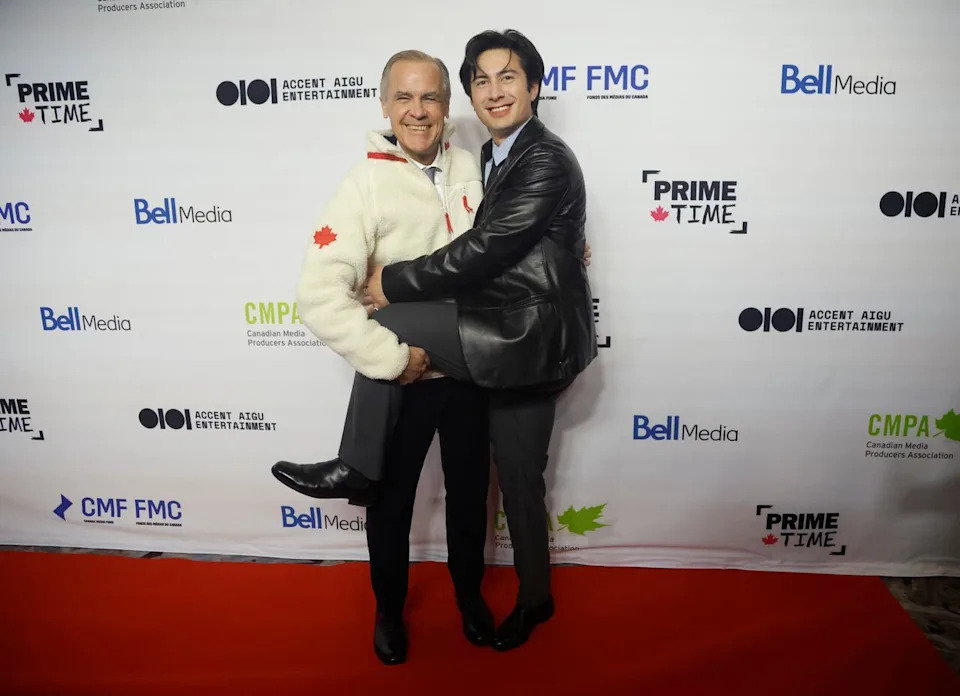
Prime Minister Mark Carney poses for a photo on the red carpet with Hudson Williams, star of the TV series Heated Rivalry, at the Prime Time Screen Gala and Media Industry Conference in Ottawa on Thursday, January 29. (Patrick Doyle/The Canadian Press)
Today, the law is under intense criticism from U.S. lawmakers who say it hurts trade. Last month, a Republican congressman proposed a bill requiring U.S. Trade Representative Jamieson Greer to investigate the tax and retaliate if it is deemed an unfair trade practice.
So is the online streaming law worth all the trouble it’s getting from the US? CBC’s The House spoke to experts about why this bill has sparked so much controversy and whether Canada should stand firm in the face of pressure from the United States.
US streamers claim discrimination
In a statement to CBC News, the Motion Picture Association of Canada – which advocates for major streamers like Disney+, Netflix and Prime Video – said “fair market access is essential to maintaining a strong film and television industry.”
The association also said the law “disadvantages American companies and undermines competitiveness” by requiring them to subsidize and promote Canadian content over their own productions through “discriminatory” obligations.
Michael Geist, Canada Research Chair in Internet and E-Commerce Law at the University of Ottawa and a critic of the bill, agrees.
“This idea that somehow there are these big U.S. companies that don’t contribute has just never come true. The reality is that these companies have spent hundreds of millions of dollars on film and television production in Canada,” Geist said.
However, these editions may not meet the definition of Canadian content. Failure to meet the criteria prohibits these streamers from accessing the pools of money they contribute to through the Online Streaming Act – funds that are currently withheld due to court challenges by streamers.
According to the Canada Media Fund website, an applicant (generally the producer) must be Canadian and have “full creative and financial control over all aspects of the project, from development to production and exploitation.”
“To be certified, a Canadian production must be substantially meaningful and verifiably owned by a Canadian,” the website adds.
There is an exception under the Canada-U.S.-Mexico Agreement (CUSMA) that allows Canada to “take measures to support and protect its cultural industries without violating the terms of the agreement,” according to the federal government.
But Geist said invoking this exemption opens Canada to trade attacks and allows the targeted country to target any Canadian sector in retaliation.
Supporters say the bill provides a level playing field
De Jong said Netflix and other major streamers are great partners, but Canadian ownership of media productions can protect workers and companies from outside disruptions, such as the Writers Guild of America strike in 2023.
“Canadian companies are greatly affected by this because the content is controlled from the US and not from the Canadian side,” she added.
According to an analysis by the Canadian Media Producers Association, which supports the Online Streaming Act, the media production industry contributed $11.04 billion to Canada’s GDP in 2023-2024, but overall production volume fell 18.5 per cent.

SAG-AFTRA member Romell Russell balances on a bus bench near the picket lines in front of Netflix on Wednesday, September 27, 2023, in Los Angeles. (Chris Pizzello/Invision/AP)
The association attributes this downturn to the labor strike and “a slowdown in Canadian content commissioning, particularly in English-language television, as Canadian broadcasters made up for underspent dollars during the pandemic.”
Its CEO, Reynolds Mastin, told the House that contributions to the Canada Media Fund “will continue to decline” as more people cut the cord and consume content online.
Maston added: “Everyone thinks this is inevitable. This has been going on for years. This will put more and more pressure on the system. And ultimately it will mean fewer Canadian shows.”
De Jong said the online streaming law “levels the playing field for everyone” and ensures everyone brings a little bit of money back to Canada “so that we are able to create great Canadian content that will also play on these streamers and be offered to our audiences.”

Carla de Jong is head of co-production and international partnerships at Sinking Ship Entertainment, a Toronto-based production company specializing in children’s programming. (Submitted by Carla de Jong)
On music, former NDP MP Andrew Cash – now CEO of the Canadian Independent Music Association – said funding Canadian content is critical to creating a vibrant Canadian music industry.
“There really isn’t a single musician who hasn’t been influenced, directly or indirectly, by the things that came out of it.” [Canadian content]Cash said.
“The question really is, do we want to own our own cultural sector or not? And C-11 – the online streaming bill – is a way to answer part of the question,” he added.
Carney’s political calculation
Prime Minister Mark Carney has shown he is willing to withdraw some bills in the service of easing trade tensions with the United States – as he did with the digital tax after the US president called for its repeal and the halting of Canada-US trade negotiations.
Vass Bednar is executive director of the Canadian Shield Institute, a think tank focused on Canadian sovereignty and economic resilience.
She said the online streaming law is a necessary piece of legislation and that Canada should not become an “algorithmic vassal state” where foreign digital companies decide what Canadians can pay for.


Vass Bednar is executive director of the Canadian Shield Institute. (McMaster University)
Mastin argued that major U.S. streamers were involved in the creation of the law and that there was a lot of thought put into how Canada could modernize its system so that it works for the streamers too.
“So it’s hard for me to imagine how we could make any more concessions in this context when the online streaming law was already the result of a political compromise – in part to reflect the concerns of US interests and US companies. And I think we should resist that temptation as a country to do that,” Mastin said.
Geist said he’s happy with discoverability regulations that ensure platforms do a better job of promoting Canadian content, but ultimately he’d like to see the free market function like a free market.
“We start with the question of what is broken and needs regulation, not with the question ‘We need regulation, what are we going to try to regulate here,’” Geist said.
De Jong said one of the most important things to protect now amid global upheaval is Canadian values - and ensuring children across the country see themselves represented on television.
“I think it’s also important that we remember that our media shows who we are to ourselves, but it also shows who we are to the rest of the world,” de Jong said.