


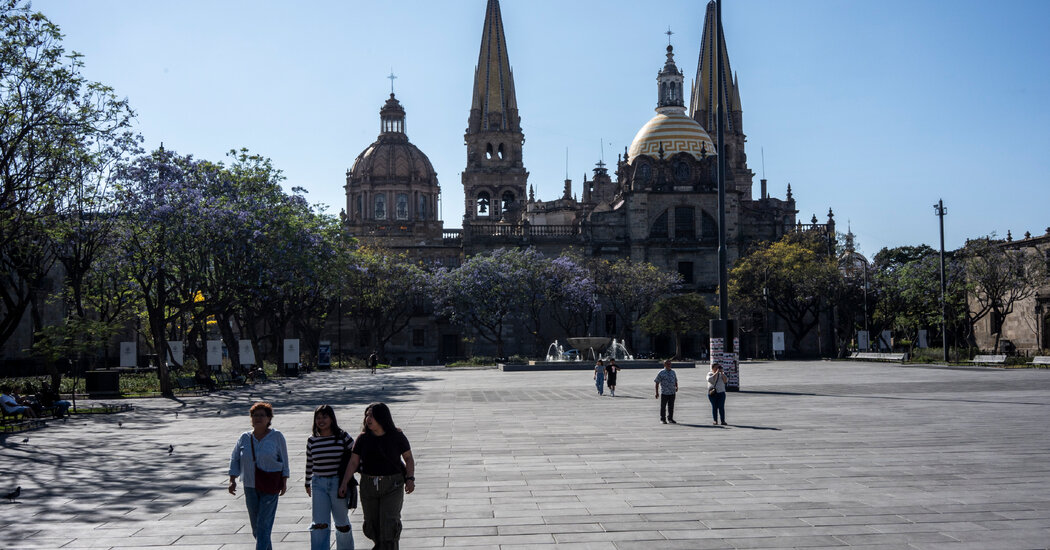
With spring break just weeks away and snowbirds looking to avoid a stormy winter, recent unrest in Mexico has travelers worried about whether it is safe to visit the country right now.
While tourism is not typically affected by cartel violence, which is often limited to local communities, this time was different. Flights to and from Puerto Vallarta and Guadalajara were canceled, and incidents near other popular tourist areas – including Cancún and Playa del Carmen – led to temporary warnings from the U.S. government to impose “shelter in place.”
“Although the situation is likely to stabilize in the coming days, this marks a new phase in the cartel response to high-level enforcement actions,” said Kent Webber, a former Pentagon official and senior manager at Global Rescue, a U.S.-based travel security organization. “No trip to Mexico is ever risk-free,” he said, adding that the environment can change quickly if senior cartel members are killed or captured.
Here’s what travelers planning to visit Mexico in the coming weeks should know:
What’s new with the cartels?
On Sunday, Nemesio Oseguera Cervantes, or “El Mencho,” the head of the powerful Jalisco New Generation Cartel, was killed in Jalisco state, triggering a spate of violence and unrest, including shootings, fires and roadblocks. Mexican officials said they arrested 70 people and killed 34 people suspected of being cartel members, while 25 National Guard members were killed.
On Tuesday, the U.S. government’s shelter-in-place measures were lifted for its citizens, including in Guadalajara, Puerto Vallarta and Ciudad Guzmán, and unrest had subsided. Security alerts from the U.S. mission in Mexico also noted that flight schedules in Guadalajara had returned to normal, there were no reports of road closures and that public transportation and businesses were returning to normal operations.
According to the Mexican government, nearly 10,000 Mexican soldiers were deployed to quell the unrest. Mexican President Claudia Sheinbaum said Monday that “peace reigns in the country.”
How are tourists affected?
The unrest has unsettled travelers heading to Mexico, where visitors on Sunday and Monday reported canceled flights and hotel closures and posted videos of supermarket fires. Other travelers said few shops were open and roads were blocked.
Still, experts say tourists are generally spared from cartel violence.
In the past, Mexican drug cartels have largely left tourists and expatriates alone to avoid unwanted government controls. But as larger cartels break down into smaller and more opportunistic factions, that restraint may weaken, Webber said. “Decentralization increases unpredictability and unpredictability increases random risk,” he said.
Because tourism drives many of Mexico’s local economies, the government is implementing a stronger security presence in key tourist areas. Many resorts also employ their own private security service.
Robert J. Bunker, research and analysis director at C/O Futures, a security consulting group, said he doubted cartel members would target American citizens. “But this cartel is a wild card,” he added, referring to the Jalisco New Generation Cartel, Mexico’s most powerful criminal organization.
“I think there will initially be a major blow to the authorities,” said Mr. Bunker, who has studied Mexican cartels since the 1990s and has written a dozen books on the subject. “But it wouldn’t make sense to attack tourists.”
What about other parts of Mexico?
As is generally the case, the security situation in Mexico varies greatly. Some states, such as Campeche and Yucatán, are currently under a Level 1 U.S. State Department advisory to “take normal precautions.” For others – including Sinaloa, Zacatecas, Tamaulipas and Michoacán – the level 4 advisory “do not travel” applies. Most areas popular with tourists, including Mexico City and the states of Baja California Sur and Quintana Roo, are at Level 2 with an advisory to “exercise increased caution.”
Travelers planning a trip to Mexico should take a close look at the security situation in their destination.
Cancún, the most popular spring break destination, and surrounding destinations – Cozumel, Tulum, Playa del Carmen – all lie outside the Jalisco Cartel’s historic violent presence and on the other side of the country from Puerto Vallarta.
“If it were my family, there is no way I would want them in Puerto Vallarta or Guadalajara in the near future,” Mr. Bunker said. “But I wouldn’t cancel a trip to Cancun for spring break.”
Mr. Bunker said he expects this latest wave of unrest “to have subsided by spring break,” adding that he will remain cautious and vigilant and advise checking guidance from the U.S. State Department before traveling.
Other destinations such as Los Cabos on the southern tip of Baja California Sur were not affected by the recent cartel violence. For Mike Ballard, intelligence director at Global Guardian, a travel risk management company, Cabo San Lucas, a resort there, is a place he would now easily recommend to his clients — as long as they follow the news. “But as we have seen, this can all go wrong quickly,” he added, “so you should be aware of what is going on before you leave.”
Mexico City also remained largely untouched this week, according to Ballard, who said that “most criminal groups in Mexico City don’t want to wreak havoc.” For this reason, his company continues to recommend that people continue their travel plans to Mexico City using safe means of transportation.
What can travelers do to reduce their risk?
Travelers should monitor the U.S. Department of State’s Mexico travel advisory page for the most current information, which may change hourly. You should also enroll in the U.S. Department of State’s free Smart Traveler Enrollment Program, known as STEP. If possible, speaking to friends or family members on site at your destination can also give you an idea of the specific security situation of a location.
In higher-risk situations, hotels often find themselves in a conflict of interest: They want travelers to keep their reservations, but they also don’t want travelers showing up and experiencing danger or stress. Visitors should contact hotel providers to learn about their safety measures. However, it is also advisable to get a second opinion from a more neutral source.
Travelers should also pay particular attention to their safety outside of the hotels or resorts where they are staying. Visitors can also minimize trips outside of these bases.
Mr. Bunker also recommends travelers work with their hotels or resorts. “They will either have their own transportation at the resort or their own trusted agents as far as taxis and everything else,” he said. “You don’t want to just say ‘yes’ when someone comes up to you and offers you a taxi ride.”
Travel insurance can help reduce financial risk, but be sure to read the fine print. You may need a costly upgrade called “cancellation for any reason” to cover a wider range of disruptions.
In the end, if you assess the risk and decide to continue your trip, try your best to relax and enjoy your vacation. “As long as you do your due diligence, I think you’ll be fine,” Mr. Bunker said.
Stephen Hiltner contributed reporting.
Follow New York Times Travel on Instagram and sign up for our Travel Dispatch newsletter to get expert tips for traveling smarter and inspiration for your next vacation. Are you dreaming of a future getaway or just armchair traveling? Check out our 52 destinations in 2026.