


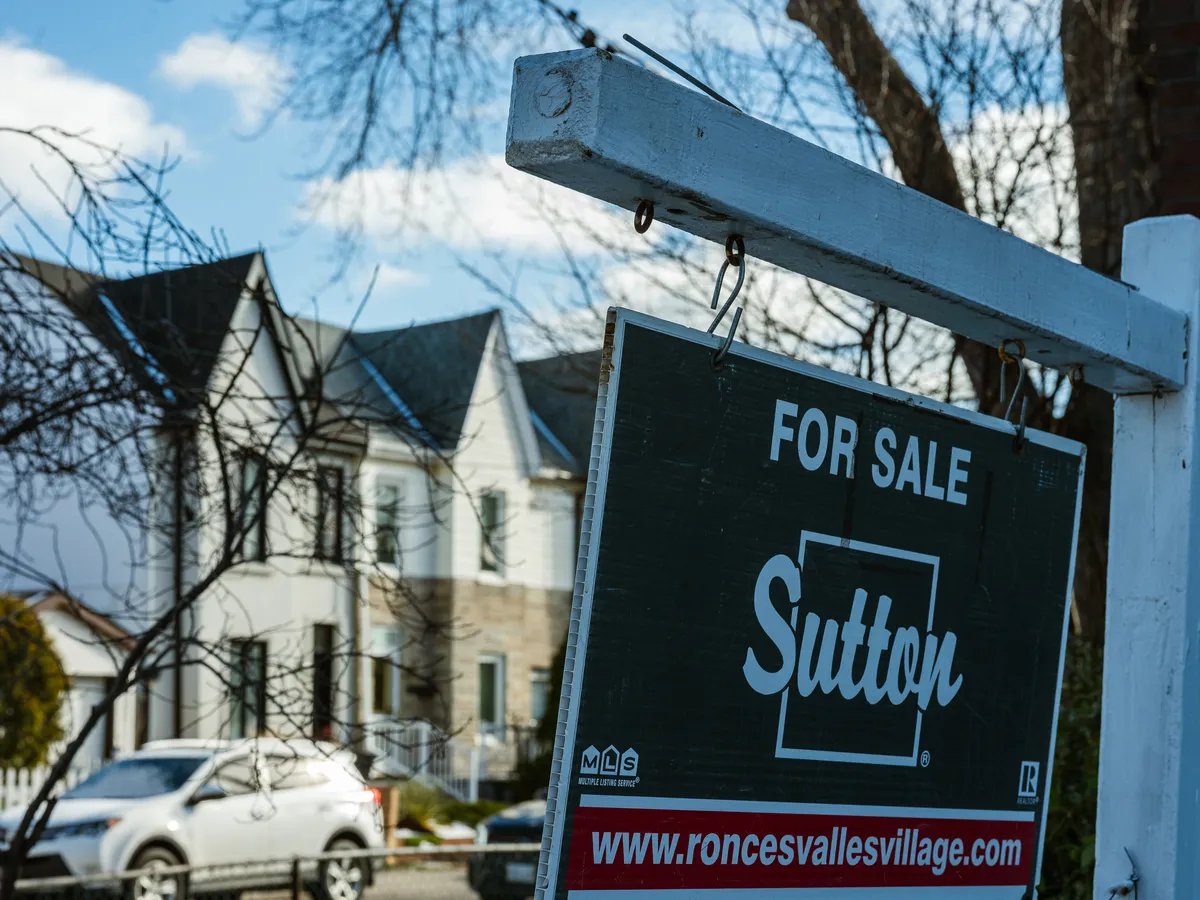
To stimulate demand for housing and jumpstart stagnant supply, the Ontario government is extending its tax breaks to new home purchases beyond first-time buyers.
Ontario Premier Doug Ford announced Wednesday that all home buyers can now qualify for a one-year exemption from the 13 per cent harmonized sales tax (HST) on newly constructed homes valued at $1 million or less, with partial rebates for higher-priced homes. The move is aimed at boosting demand and encouraging construction at a time when higher borrowing costs and weak pre-sales have made it difficult for projects to get off the ground.
The Financial Post explains what the tax change means for buyers, developers and the province’s real estate market as a whole.
What has changed?
The new tax measure, the cost of which will be shared with the federal government, offers eligible home buyers a maximum rebate of $130,000 for homes priced up to $1.5 million before the rebate gradually decreases to $24,000 at $1.85 million.
The policy change now extends relief previously limited to first-time buyers to all buyers, potentially expanding the pool of market participants. The expanded eligibility applies to newly constructed residential properties, including condominiums and condominiums, whose purchase agreements were signed between April 1, 2026 and March 31, 2027.
Under the previous system, the HST policy provided limited relief in higher-cost markets such as the Greater Toronto Area. The federal portion of the rebate was eliminated entirely for homes over $450,000, leaving most buyers ineligible.
Although Ontario’s rebate was available, it was capped at $24,000, which did not eliminate the full tax burden. In comparison, the new policy offers more meaningful relief in higher-priced markets, with a potential savings of $130,000.
Why is the government doing this now?
There is no definitive number of unsold new homes in Ontario, but data from the Canada Mortgage and Housing Corporation (CMHC) shows an increase in the number of “unabsorbed” units across the province.
In the Greater Toronto Area, real estate and consulting firm Urbanation estimates that more than 4,000 newly completed condominiums have not yet been sold. Another 50,000 units are currently under construction, of which 9,000 are unsold.
Industry groups say the extended tax break could help boost demand. “It provides a strong incentive for potential homebuyers to come off the sidelines and buy homes… and by doing so it will increase sales… and by increasing sales it will further translate into more starts,” said Justin Sherwood, chief operating officer of the Building Industry and Land Development Association (BILD).
How does the HST exemption work?
Eligible buyers will not be required to pay the 13% HST at closing. In some cases, the tax may be collected in advance and later reimbursed through a refund, but this depends on the structure of the transaction.
“Every dollar the tax is reduced is one dollar less the homeowner has to borrow to pay for a new house,” Sherwood said.
Lower upfront costs can also make it easier for a buyer to qualify for a mortgage. For example, if someone purchases a home priced at $1 million, the HST tax amount is $130,000. Without the tax break, the amount one would have to borrow from the bank might be $1.13 million, but the exemption brings the financing closer to $1 million.
What economic impact can be expected?
At his news conference Wednesday in Mississauga, Ford said the measure could help more families realize the dream of homeownership while potentially boosting the economy by $2.7 billion and supporting 21,000 jobs. He added that the exemption would mean a tax relief of 2.2 billion euros and support the construction of 8,000 homes.
According to BILD, the housing sector currently employs more than 500,000 people across Ontario and contributes $66 billion annually to the economy.
What does the new policy not solve?
Developers continue to face broader cost pressures involving development fees, municipal fees and the cost of building infrastructure such as roads, transit and wastewater systems.
According to BILD, in some communities in the Greater Toronto Area, municipal fees account for 25 to 30 percent of the final purchase price of a new home.
The Toronto Real Estate Board stated that construction costs increased significantly throughout the development process. These costs are ultimately passed on to homebuyers and renters, leading to higher property prices and a reduction in much-needed supply.
Sherwood pointed to changes to development fees as a possible next step.
“I think there’s always the challenge of making sure there’s enough housing-supporting infrastructure,” he said. “Hopefully measures on development fees will be announced in the next few months that will help address this issue.”
• Email: shcampbell@postmedia.com