


There’s a famous quote from Mark Twain about real estate: “Buy land, they won’t do it anymore.”
Most of the time that’s good advice, but these days Canadian developers already have more than they want.
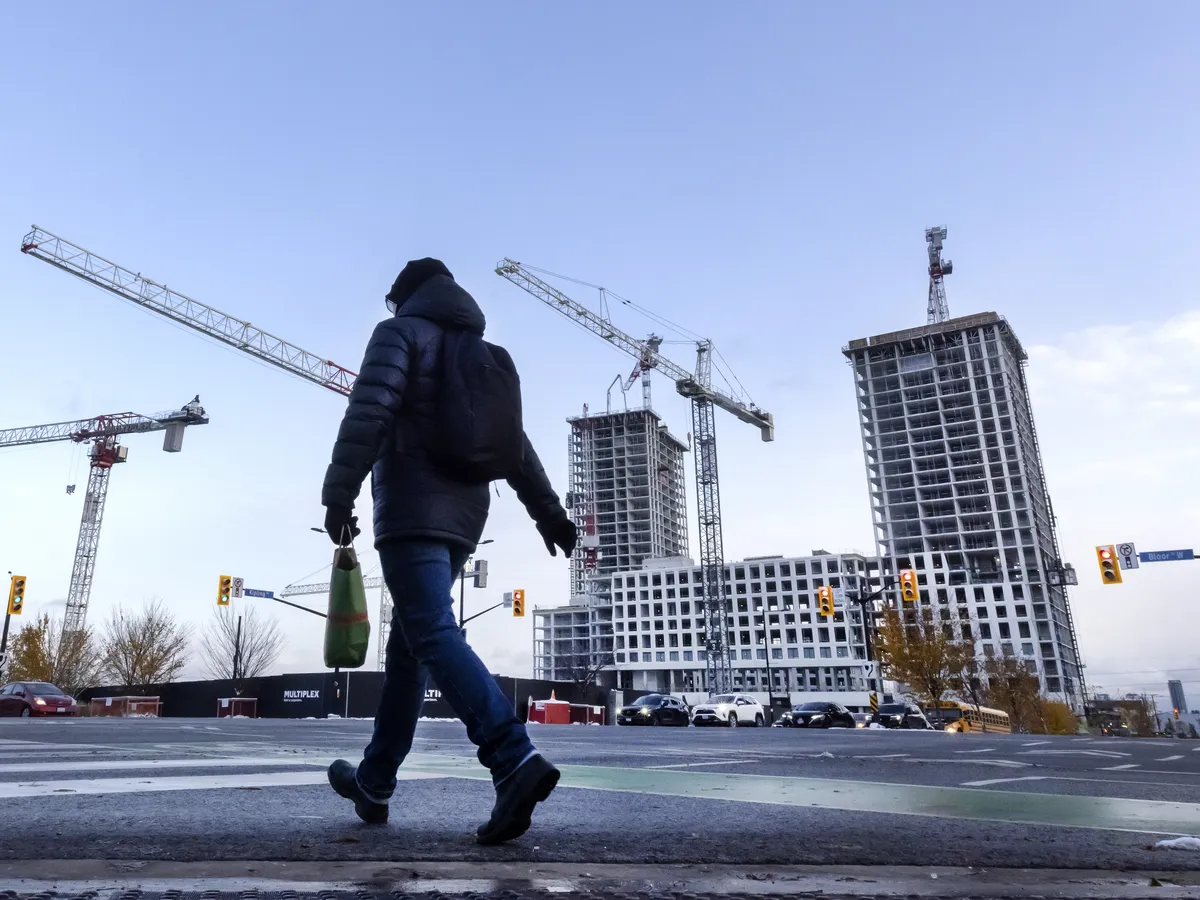
As construction of new condo projects stalls in Toronto – there were zero in the first quarter, the slowest in at least three decades – many are being forced to accept high transportation costs, forcing them to consider alternative uses for their property.
Mitchell Cohen, chief operating officer of Westdale Properties, which has hit the hold button on about 12 of its projects, doesn’t seem too concerned.
“We’ll just wait and see,” said Cohen, now in his fifth decade in the industry. “Putting it on hold is very costly. We have to pay our taxes, securities and the bank. But real estate rewards patience – when coupled with discipline.”
Like Cohen, most residential developers appear to be in no rush to sell, as low prices result in very little liquidity.
Cohen said his company is currently “exploring all options” regarding its locations and he is open to new ideas. Many condo developers have shifted gears and are now converting their entire projects to rental housing, but the manager said he is cautious about jumping on the bandwagon that has seen more purpose-built rental housing in decades.
“It’s not always a panacea. People are moving into purpose-built rental properties like it’s a safe haven, but it happens to be the only boat leaving port right now,” Cohen said. “We need to be analytical before committing to false assumptions.”
Cracks are already beginning to appear in the apartment rental market, which has been hit hard by a drop in demand due to reduced immigration and foreign student enrollment.
Condominium research firm Urbanation Inc. said the vacancy rate in stabilized buildings completed in the Greater Toronto Hamilton area since 2000 was 5.4 per cent in the first quarter of this year, more than double what it was two years ago.
New projects are under increasing pressure: two-thirds offer incentives for tenants and almost half of new projects include two months of free rent with a rental agreement.
Looking for alternatives in today’s market, Brookfield Property Partners and Larco Investments caused a stir last week when it was announced that they plan to convert at least part of a site that was long the home of an HBC department store at the intersection of Yonge and Bloor in Toronto into self-storage.
It’s a move Cohen was quick to applaud.
“I wasn’t shocked at all. This proves my point that real estate developers need to adapt to a changing market,” he said, adding that in the short term it could mean alternative uses, such as allowing pickleball or food trucks on a property. “The freight isn’t paid, but it’s better than a vacant lot.”
Shaun Hildebrand, president of Urbanation, said land deals have been rare, but what is moving is 50 percent lower than market peak based on price per buildable square foot.
“People paid way too much, but it’s hard to get much out of (today’s prices) because the sample (of sales) is small,” Hildebrand said.
Urbanation’s latest data from the fourth quarter of 2025 shows that the total transaction value of all land sales in the Greater Toronto Area was approximately $762 million, 56 per cent below the five-year average of $1.74 billion.
“Some projects that were supposed to be condos have been converted to rentals,” Hildebrand said, noting that since the start of 2024, 11,500 condos marketed in the Greater Toronto Hamilton area have been canceled and about 4,000 have been converted to rentals.
He said the market now favors larger companies with deeper balance sheets that can stay ashore longer, and is leading some to take on smaller projects that have lower capital costs and risks.
“There simply won’t be any tall towers; there will be more mid-rise towers that are easier to manage financially,” he said. “Anyone selling land is in some sort of distress. Others are just waiting for market conditions to improve.”
Adam Jacobs, head of research at Colliers in Canada, said the condo situation has taken some energy out of the real estate sector. He said the entire condominium model, which relies on pre-sales of about 70 percent to finance a project, could evolve in the future.
“Are you signing up to purchase a pre-construction condo that won’t be delivered until 2032?” Jacobs said.
The backlog of unsold condominiums must be cleared before there is greater demand for land to build more condominiums. This is true even with changes to eliminate the harmonized sales tax on new homes in Ontario and a reduction in development fees, Jacobs said.
The Greater Toronto Area saw more distressed property transactions as sales slowed. Jacobs said there were 78 of these land sales in 2024 and 2025, compared to 49 in the previous three years.
“Residential properties are where the need is,” Jacobs said, noting that property loans can be eight to 10 percent. “People thought there would be all these distressed sales offices or malls, but that day never comes because lenders don’t want it or the cycle changes. But with land, you just sit there with no income. We need a way to make construction profitable now, not five years from now. There are some political levers being pulled.”
Mark Goodman, principal broker at Vancouver-based Goodman Commercial Inc., said lenders he’s talking to say the wave of distressed properties coming to market in the next 24 months has just begun.
While he says there is a clear increase in sales even among “big developers”, the real estate veteran said land prices can also reach a level acceptable to developers, allowing them to make deals a success.
“We are finally seeing enough data points to trigger a rebalancing of market prices,” Goodman said.
In the meantime, for developers like Cohen, it’s time to wait. “Markets come back, they always do,” he said.
• Email: gmarr@postmedia.com