


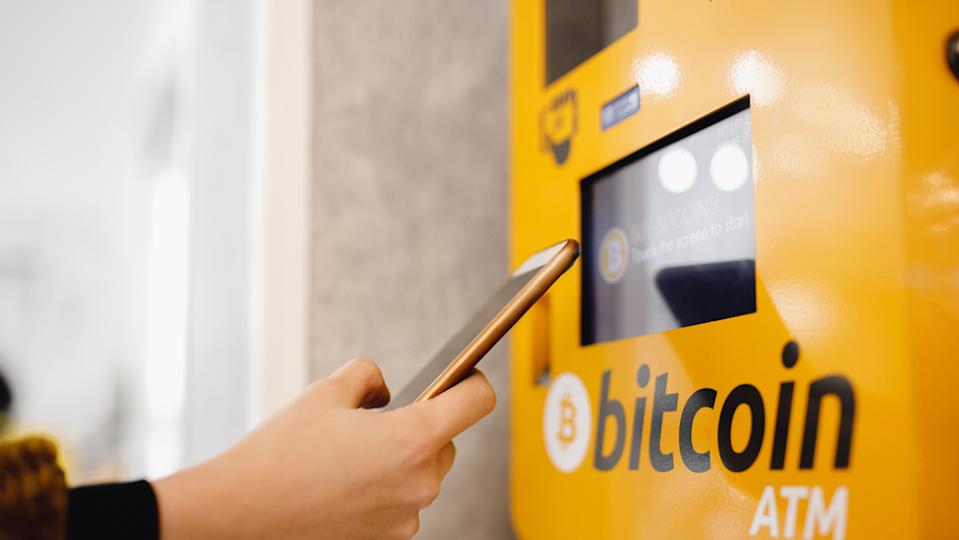
Contactless ATM for payment via Bitcoin cryptocurrency.
Walk into a typical urban supermarket or mall and you’ll likely spot one: a kiosk that promises to convert cash into Bitcoin or other cryptocurrencies in minutes. Until recently, there were about 4,000 of these cryptocurrency automated teller machines (ATMs) in Canada.
Now the federal government wants to abolish it completely.
As part of Canada’s Spring 2026 Economic Update, Ottawa announced a proposal that would make it a criminal offense to operate a cryptocurrency ATM anywhere in the country (1). The reason: These machines have become, according to the government’s own statements, a “main method” for fraud and money laundering.
If you’ve never touched one before, this change may not seem urgent. But if you’ve ever used a crypto ATM – or been told to use one by a caller, an online contact, or even a family member – you should understand what the government says, why scammers prefer them, and what to do if you’ve already been targeted.
Don’t miss it
Why did Ottawa decide to ban them?
The federal government’s decision follows a documented pattern of fraud that regulators and police departments across Canada have highlighted for years. Crypto ATMs are attractive to fraudsters for a reason: transactions are quick, largely irreversible, and, until recent regulatory changes, were conducted with minimal identity verification.
The Financial Transactions and Reports Analysis Center of Canada (FINTRAC), Canada’s financial intelligence agency, has identified cryptocurrency transactions as a growing tool of choice in money laundering and crime cases (2). Scam victims are often instructed to use crypto ATMs to quickly send money under the false belief that the transaction is legitimate or reversible.
Industry estimates suggest that there were approximately 4,000 crypto ATMs in Canada at the time of the spring economic update – one of the highest per capita concentrations in the world. This concentration, the government argues, creates an easily accessible pipeline for fraud.
Read more: Here are the 3 net worth milestones that change everything for Canadians (and what they say about you)
How do crypto ATM scams work?
Crypto ATM fraud follows a consistent pattern. A victim receives an urgent message – by phone, email or text message – from someone posing as a government agency such as the Canada Revenue Agency (CRA), a bank fraud unit or a family member in distress. The victim is told they need to send money immediately and is directed to a nearby crypto ATM to pay.
The story continues
Once the money is received and converted into cryptocurrency, it is almost instantly transferred to a wallet controlled by the scammer. Unlike a bank transfer or credit card charge, there is no chargeback mechanism and no central authority that can freeze or reclaim the money.
The Canadian Anti-Fraud Center (CAFC), a federal agency, warns that legitimate organizations – including the CRA, police and banks – will never ask you to settle an outstanding balance in cryptocurrency (3). If you receive such a request, it is a scam.
Take the first step there Trade crypto. Find a platform, create your account and see why thousands of Canadians are investing in cryptocurrency trading.
Warning signs: When to stop and check
-
Any caller demanding immediate payment via a crypto ATM
-
Requests to keep the transaction secret or “off the books”
-
A government agency or bank claims your account is “frozen” and only crypto can unfreeze it
-
A government official asking you to make a payment at a specific ATM
-
Pressure to act within minutes or face arrest, deportation or account blocking
-
Instructions on how to scan a QR code at the ATM that sends money to an unknown wallet
What does the proposed ban actually mean?
The federal government’s proposal announced in the Spring 2026 Economic Update would make operating a crypto ATM a criminal offense in Canada, but this legislation has not yet been enacted.
This distinction is important.
As of May 2026, crypto ATMs are not yet illegal in Canada. The proposal signals the government’s intent and requires legislative action before it comes into force. Canadians should monitor updates from the Department of Finance Canada regarding timing and enforcement details.
Operators of these machines – many of whom have publicly pushed back after the surprise announcement – are calling on the federal government to consult with the industry before moving forward, arguing that legitimate use cases exist and that targeted regulation could address fraud concerns without an outright ban.
For ordinary Canadians, the practical implications of the ban, if passed, are clear: the machines will disappear from convenience stores, shopping centers and gas stations. Anyone who still operates one must be liable to prosecution.
What should you do if you’ve already used one?
If you sent money through a crypto ATM and suspect it was a scam, act quickly – but be aware that recovery is difficult. Here are the steps you need to take.
-
Report it immediately to the Canadian Anti-Fraud Center at 1-888-495-8501 or online at antifraudcentre.ca. Even if recovery is unlikely, your report contributes to the data that supports enforcement actions.
-
Contact your local police and file a report. Some financial fraud departments are able to trace crypto transactions, especially if they are reported quickly.
-
If you have been pressured by someone posing as a CRA, report it separately to the Canada Revenue Agency. The CRA has a dedicated fraud reporting channel and does not contact Canadians to request cryptocurrency payments.
-
For older Canadians affected by phone crypto scams, organizations such as the RCMP’s Fraud Prevention Month campaign and provincial consumer protection offices can provide advice and support.
Ready for one better banking experience? Switch to a top-tier account today and get a cash bonus when you set up your direct deposit.
Conclusion for Canadians
The proposed ban on crypto ATMs sends a clear signal: Ottawa views these machines as a fraud infrastructure problem rather than a legitimate financial instrument. Regardless of whether the law passes quickly, the underlying pattern – instant, irrevocable cash-to-crypto payments requested by strangers – remains one of the most effective scams in Canada.
No legitimate institution will ever ask you to deposit cash into a kiosk and scan a QR code to resolve a legal or financial issue. If this request reaches you, stop, hang up, and call the organization directly at a number you can find independently.
What to read next
Join 19,000+ readers and get Money.ca’s best stories and exclusive interviews first – clear insights, curated and delivered weekly. Subscribe now.
Article Sources
We rely exclusively on verified sources and credible third-party reports. Please see our Ethics Policy and Guidelines for details.
Government of Canada (1); FINTRAC (2); Canadian Anti-Fraud Center (3)
This article originally appeared on Money.ca under the title: Canada’s crypto ATM ban: What it means for Canadians and fraud victims
This article is for informational purposes only and should not be construed as advice. The provision is made without any guarantee.