


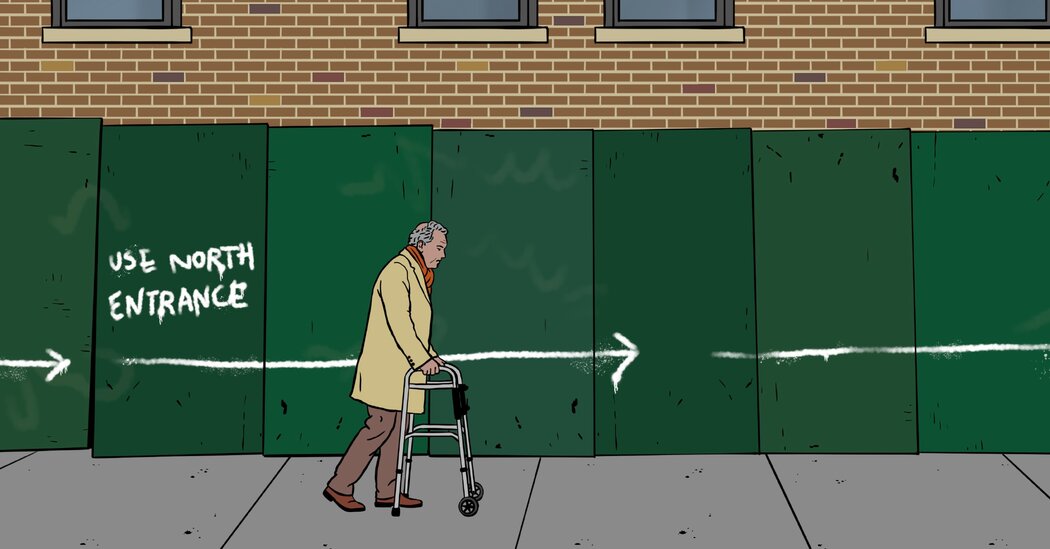
Q: We live in a co-op in New York City that has four buildings spread over several blocks. The board is updating the lobbies and landscaping and would like to permanently close one of the three entrances to our building. This would mean that my husband, who uses a walker, would have to walk an additional city block each time he comes and goes. We have relied on the entrance they want to remove for more than 50 years. Is it legal for the board to close it if it makes life more difficult for people with disabilities?
A: Before we move on to the legal aspects, you should communicate your position to your cooperative. If the board plans to inconvenience a group of residents in the building and thereby cause hardship to people with disabilities, board members should hear from the affected residents. Joining forces with like-minded neighbors can help your cause.
After making it clear that you oppose this change (and why), you can consider whether the board should be allowed to do this work. Renovation projects that involve changing entrance and exit routes require a building permit from the building authority. And the city code provides requirements for reasonable means of entering and exiting a building that must be adhered to.
You can search for building permits online. File a complaint with 311 if contractors begin work and there is no evidence of approval.
If the renovation plans comply with city law and the board has the appropriate approvals, keep in mind that board decisions are protected by the business judgment rule as long as the decisions are lawful.
“The co-op board is elected by shareholders to make decisions for the entire building,” said Adam Leitman Bailey, who practices real estate law in New York. “Buildings can change.”
A person with a disability is entitled to reasonable accommodation if necessary for the equal enjoyment and enjoyment of his or her residence.
“However, ‘more difficult’ is not the standard for him to prevail in a lawsuit,” said Andrew Lieb, a lawyer who handles discrimination cases in New York. A plaintiff would likely lose a case alleging that the building fails to accommodate him unless his health care providers conclude that the extended walk exacerbates the effects of his disability, preventing him from using and enjoying his apartment like a non-disabled person, Mr. Lieb said.