


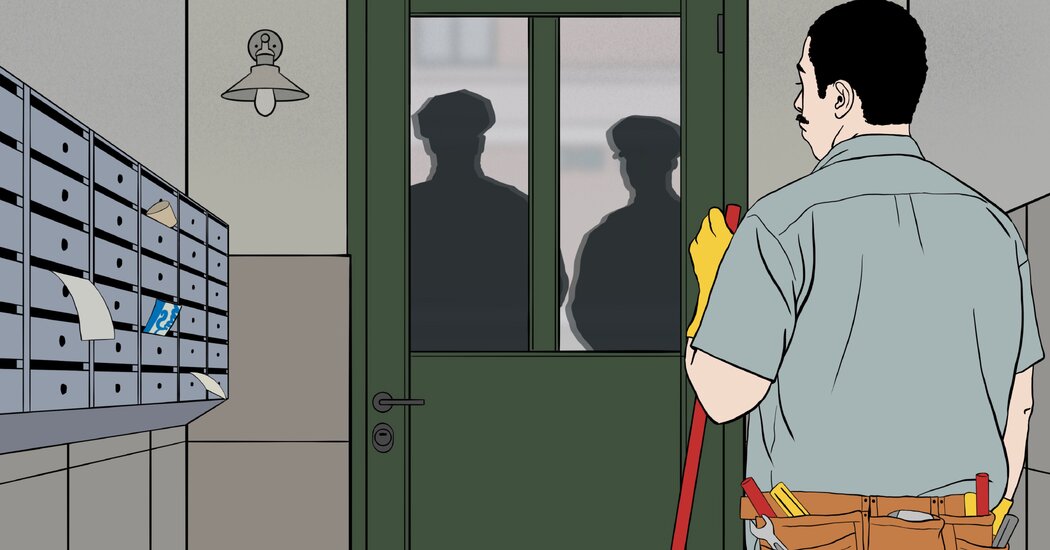
Q: Are residents and building staff required to open the door to all police officers in New York City? What are the best practices when the police or other government officials ring the doorbell? Are the building guidelines different?
A: Whether you live in a penthouse, a skyscraper with a 24-hour doorman, or a single-family home where anyone can knock on the front door, the laws are of course the same.
Police officers have the right to enter your home with a warrant and in other very limited circumstances, such as when they have reason to believe that a crime is imminent or in progress. Immigration officers must have a warrant if they want to enter your home without an invitation.
If immigration officials knock on the door and you don’t want to let them in, you are under no obligation to do so. If the agents say they have a warrant, you can request that it be slipped under the door so you can verify that it has been signed by a judge.
However, opening the door to view the search warrant could be viewed as consent to enter, said Luis F. Mancheno, citywide director of immigration justice at Legal Services NYC. However, if the warrant was signed by a judge, you must open the door or risk breaking the law.
If immigration officers don’t have a warrant and try to force their way through the door, “we advise our clients not to physically interfere with law enforcement,” Mr. Mancheno said. “Instead, they should carefully document the incident and contact legal counsel immediately.”
In an apartment building with a doorman or staff, the rules for encounters with law enforcement are mostly directed at the front desk staff.
“For them, the advice is essentially the same as always, including the fact that uninvited law enforcement officers must present a search warrant to obtain permission to pass the lobby and that employees should immediately contact management for further instructions,” said William D. McCracken, a partner at Moritt Hock & Hamroff.
However, the aggressive nature of some immigration enforcement efforts has led some construction officials to consider greater precautions. In addition to informing residents of their rights, some buildings have tightened guest protocols and security measures, such as requiring residents to come to the lobby for food deliveries, to reduce the number of outsiders with access to the building’s interior, McCracken said.