


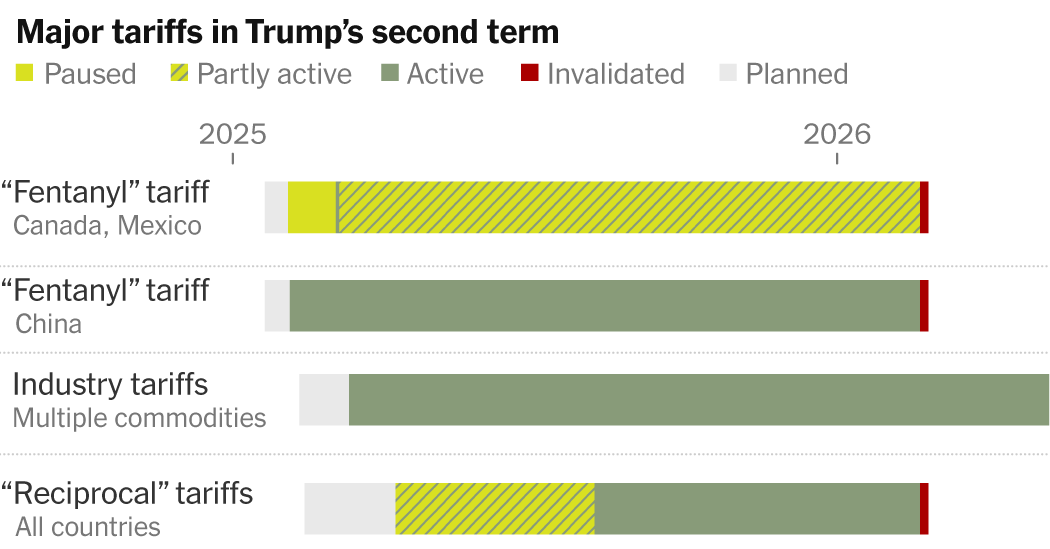
Tariffs are constantly changing under President Trump.
The latest change came this week after a federal trade court ruled that the current centerpiece of his trade strategy – a 10 percent tax on most imports from around the world – exceeded the president’s legal authority.
This general obligation remains in effect for the time being and an appeal process will be initiated. Still, the legal battle, which is far from over, adds to the uncertainty that has plagued businesses and consumers during Mr. Trump’s global trade war.
Determining what rates currently apply (or don’t apply) generally boils down to tracking the status of a handful of high-risk lawsuits.
Many of the president’s tariffs – the sky-high tariffs he first imposed on so-called “Liberation Day” last year – were struck down by the Supreme Court in February. The government has begun refunding funds collected under those tariffs, totaling about $166 billion, and the first checks are expected to arrive as early as Monday.
That range of tariffs includes the country-specific tariffs that Mr. Trump first announced to combat illegal drug sales, as well as the tariffs he imposed on a “reciprocal” basis in response to what he described as persistent trade imbalances.
Other tariffs used by Mr. Trump are more legally regulated but have been periodically moved up or down as the White House tries to achieve its economic goals — or mitigate the consequences of the president’s policies. These include the tariffs the president imposed on products like cars and steel on national security grounds, relying on a legal provision called Section 232.
Still, much remains uncertain about Mr. Trump’s next steps, and his tariffs are expected to change significantly again in the coming months. Using another set of powers, known as Section 301, the government has launched investigations into the trade practices of dozens of countries. Mr. Trump’s goal is to revive the kind of tariffs he had before the Supreme Court sided against him.
At the same time, Trump continues to threaten new tariffs against countries, including in Europe, and generally promises to double down on his strategy even in the face of legal setbacks.
“We always do it differently,” Trump said this week when asked about his recent defeat. “We get a decision and we do it differently.”